Where Arab Traders Met the Thai Kitchen: The Thai–Arab Fusion Story
Most fusion food is a restaurant idea, a chef's experiment from last decade. The food in this corner of our blog is something else: a fusion that happened slowly, over centuries, in port towns and palace kitchens, cooked by Muslim communities who made Thailand their home and gradually made its food their own. When you eat a massaman curry or fold a hot mataba around spiced beef, you are tasting one of the oldest true fusion cuisines on earth — Arab and Persian spice craft poured into a Thai vessel of coconut milk, tamarind and fresh herbs.
This guide anchors our Thai–Arab Fusion Food tab. It tells the story of how the traders came, explains the flavour grammar their descendants cook by, walks the signature dishes at survey depth, and shows you where this food lives now — from Bangkok's old Muslim quarters to the roti shops of the Deep South and the breakfast stalls of Phuket. Our Deep South guide covers the Malay heartland in full, and a dedicated Mataba post already sits in this tab; here we draw the whole map.
Traders First, Then Neighbours
The story begins with the sea. For many centuries before Europeans reached Southeast Asia, Arab and Persian merchants sailed the monsoon routes between the Gulf, India and the ports of Siam, trading in exactly the goods this cuisine still runs on: dried spices, textiles, and ideas about how both should be used. Muslim communities settled where the trade settled — in the southern ports of the Malay Peninsula, in Pattaya's neighbouring harbours up and down the coast, and in Ayutthaya, the old capital, where foreign quarters were a normal part of city life and Muslim officials rose in royal service.
Trade became neighbourhood, and neighbourhood became kitchen. The newcomers brought the dry-spice cabinet of the Arab-Persian world: cumin, coriander seed, cardamom, cinnamon, cloves, nutmeg, bay, dried chillies arriving later by the same sea roads. Siam gave them what the tropics grow in abundance: coconut milk, tamarind, palm sugar, fresh turmeric, lemongrass and an ocean of seafood. Neither side's cooking survived the meeting unchanged, and neither would have wanted it to.
The court layer came next, and it is where the most famous dish earned its fame. As the tradition is commonly told, massaman curry entered the royal kitchen in the Ayutthaya and early Bangkok era through Muslim cooks and officials at court — and its name still carries the memory: massaman is generally traced to Mussulman, an old word for a Muslim. Court poets praised the dish in verse, which is why a curry has a literary pedigree. Treat the details as tradition rather than court records, but the core of the story is sound: this food went both ways, street to palace and palace to street, and it has been Thai ever since — Thai food with a Muslim accent, cooked by Thai Muslims as their own.
The Flavour Grammar: Warm Spice over Coconut and Tamarind
Every cuisine on this blog has a grammar, and this one's is easy to learn because it is so distinct. Where central Thai cooking is bright — lime, fresh herbs, fish sauce, a keen sour edge — Thai–Arab cooking is deep: warm, rounded, gently sweet, and perfumed with dry spices that have been toasted and pounded into the curry base.
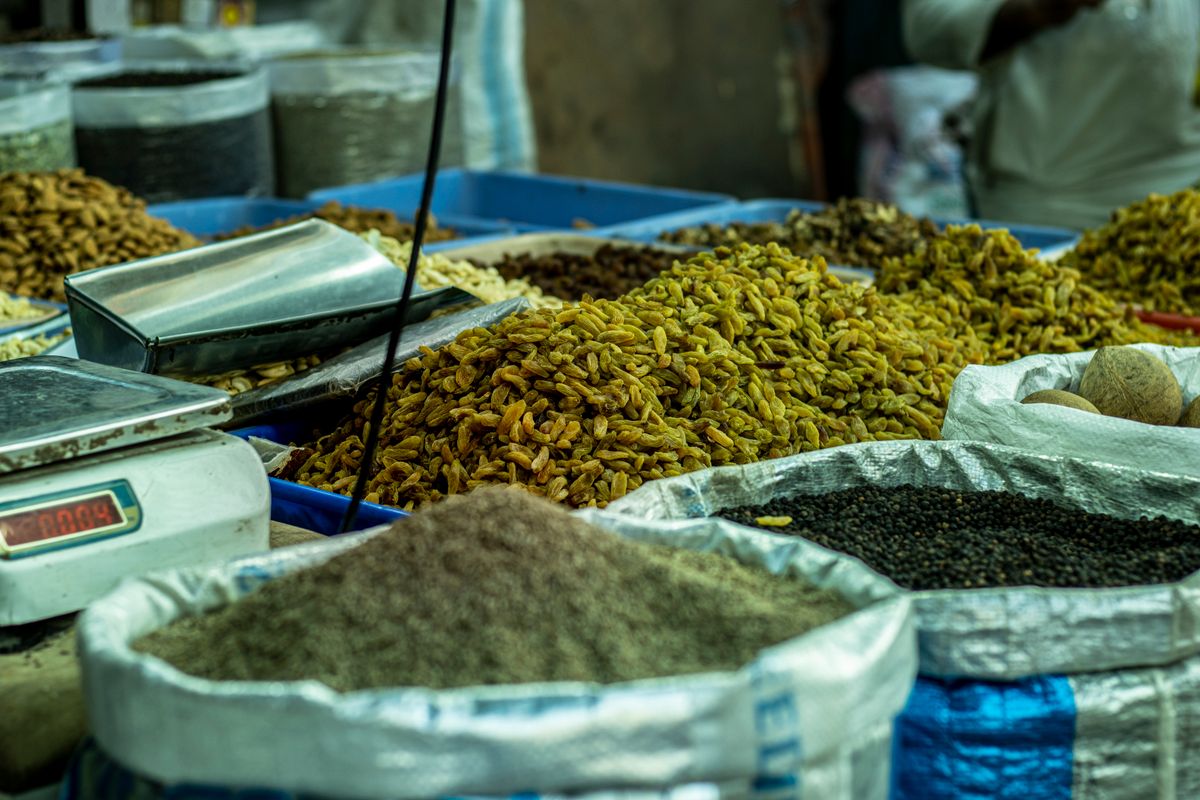
The dry-spice layer comes first. Cumin, coriander seed, cardamom pods green and black, cinnamon bark, cloves, star anise, nutmeg and mace, bay leaves, black pepper and dried red chillies form the palette. In a massaman paste these sit alongside the Thai wet ingredients — shallots, garlic, lemongrass, galangal, shrimp paste in some hands — and the result is a curry that smells closer to a biryani's kitchen than to a green curry's. This is the clearest marker of the fusion: India and Arabia supplied the spice logic; Thailand supplied the paste technique and the coconut milk it swims in.
Coconut does the carrying. Rich coconut milk turns those dry, dusty spices into a sauce with body, and it softens their edges the way it never quite does in Indian cooking, where yoghurt or tomato often does that job. Thai–Arab curries are mellow rather than fiery; heat is present but rarely the headline.
Tamarind and palm sugar set the tilt. The sweet-sour balance leans sweet, with tamarind giving a dark, fruity sourness rather than lime's bright cut. Peanuts appear again and again — in massaman, in the famous Muslim salad's sauce — a New World ingredient by origin that this old fusion absorbed so completely it now reads as a signature.
Meat matters, and it is halal meat. Beef and chicken dominate (oxtail, goat in the south, mutton where the community is old and prosperous), cooked long and slow in the curry rather than flash-fried. Pork is absent — this is Muslim cooking, and the whole flavour architecture was built without it, which is part of why it tastes different from the rest of the Thai table rather than merely like it with spices added.
The Signature Dishes
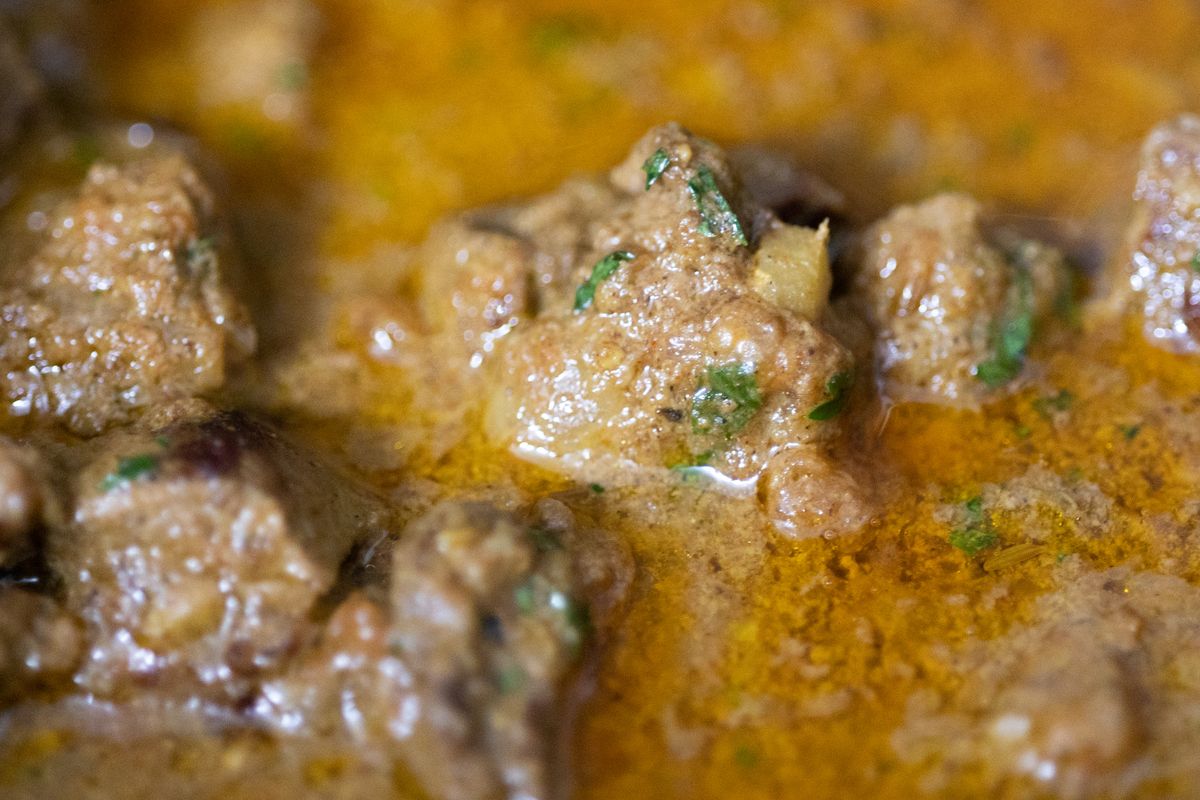
Gaeng massaman. The ambassador dish, and the one to start with: beef (or chicken) braised in coconut curry thick with roasted dry spices, with whole potatoes, onions and roasted peanuts, finished with tamarind and palm sugar. It should taste warm, sweet-sour and deeply spiced, more perfumed than hot. A famous international list once ranked it the world's most delicious food, which locals treat with a shrug and a smile — but it did tell the world what Muslim Thailand already knew. Massaman is a celebration dish, made in big pots, better the second day, and it is the standard by which every cook in this tradition is quietly judged.
Khao mok gai. Thailand's biryani: chicken marinated in turmeric and dry spices, rice cooked with the spiced juices until it turns golden, served with a sharp cucumber relish and often a green herb sauce. Its home ground is the Deep South — our dedicated guide there tells its full story — but you will find it at Muslim stalls all over the country, the yellow rice announcing itself across the market.
Mataba. The stuffed roti: a flaky flatbread folded around a filling of spiced minced beef or chicken and egg, griddled until crisp at the edges, cut into squares and eaten with cucumber relish. It belongs to the roti-shop world described below, and this blog's own Mataba post gives it the full treatment — here, just know it as the fusion's great snack, Arab bread technique carrying Thai-seasoned spice.
Roti with gaeng. The morning ritual: a plain roti, torn by hand, dragged through a bowl of curry — massaman, chicken curry, goat curry where fortune allows — with strong sweet tea or coffee alongside. The bread is the cutlery. Wherever you see a roti shop with a queue at 7 a.m., this is what the queue is for.
Salat khaek. The "Muslim salad," a Bangkok classic in the old quarters: a composed plate of lettuce, tomato, cucumber, boiled egg, fried tofu, crisp shallots and sometimes potato or chicken, under a warm, spiced peanut sauce that is a cousin of satay sauce. It sounds unlikely and eats beautifully — cool salad against rich sauce, the fusion's grammar served cold.
Sup hang wua. Oxtail soup in the Muslim style: a clear, deeply spiced broth — star anise, cinnamon, cardamom, fried shallots on top — with falling-apart oxtail, tomato and onion, sharpened with lime and chilli at the table. Where a central Thai tom is bright and herbal, sup hang wua is dark and warm, a soup that tastes of the spice trade itself. Beef or oxtail soups in this style anchor many an old Bangkok Muslim shophouse menu.
Satay, the traveller. Satay's route tells the fusion story in miniature. The skewer-and-fire idea is generally traced to Java, itself seasoned by Arab and Indian kebab traditions, then carried north by Malay traders into the Thai south and on to Bangkok, where it changed again: Thai satay — classically pork, though that marks the non-Muslim adaptation — comes with cucumber relish and peanut sauce, while Muslim satay in the south keeps to beef and chicken and a spicier hand. One stick of grilled meat, three cultures arguing happily over it.

Where This Food Lives Now
Bangkok's old Muslim quarters. The capital's deepest layer of this food sits along Charoen Krung Road, Bangkok's first paved road, which runs through old trading quarters where Muslim communities have cooked for generations — shophouses serving massaman, oxtail soup, salat khaek and roti a short walk from the river piers, in streets that also hold mosques, Indian sweet shops and Chinese shrines shoulder to shoulder. Elsewhere in the city, Muslim pockets around old mosques keep the same repertoire: curry shops, biryani stalls, and roti carts that appear at dusk. This is Bangkok food history you can still eat for lunch.
The Deep South. Pattani, Yala, Narathiwat and the Satun coast are the heartland, where this food is not a specialty but breakfast, lunch and dinner — our Deep South Food guide walks that table in full, from khao mok to pulled tea. The short version: nowhere in Thailand does the spice grammar run deeper, and nowhere is the roti shop more completely the centre of morning life.
Phuket's Muslim table. Phuket is a genuinely mixed island — Buddhist, Chinese, and Muslim communities layered by the same tin-and-trade history as the mainland ports — and its Muslim food layer is everywhere once you look: roti shops in every town doing the morning curry-and-tea ritual, massaman and khao mok at market stalls, the island's own Muslim villages on the east coast grilling seafood in their own style. Phuket Town's food scene (see our Phuket coverage across the network) carries it proudly: the island's famous breakfast culture — dim sum, noodles, roti — is itself a small fusion map, and the roti plate is the Arab-Persian flag planted in it.
The roti shop, everywhere. Learn to read one and you can eat this food in any Thai town: glass case of curries behind the counter, the griddle man slapping dough at the front, mataba and sweet roti (with condensed milk, banana, egg) for the children, strong tea pulled long and frothy. Prices are low, mornings are the main event, and a seat at the marble table puts you inside the community rather than in front of a show.
Eating Halal in Thailand: The Sign System
For travellers seeking this food — or eating strictly halal — Thailand makes it straightforward once you know the marks. Look for the halal certification logo (a crescent within a diamond, issued by the Central Islamic Council of Thailand) on restaurants and packaged goods; look, too, for the informal signals that predate any logo: the shop's name in Arabic script, a crescent on the sign, no pork anywhere on the menu, and a roti griddle by the door. Muslim stalls cluster near mosques in every town, and market vendors will tell you plainly who cooks halal and who does not — it is an everyday question, asked without awkwardness. In the Deep South and Muslim quarters of the south generally, halal is simply the default, and the question reverses: it is the non-halal exceptions that get marked.

The Verdict: Fusion Older Than the Word
Place this table beside the others on this blog and its character sharpens. It has none of northern Lao food's foraged bitterness, none of Isan's raw funk, none of Vietnam's herbal brightness-on-a-plate. Its warmth is architectural: slow braises, toasted spice, coconut richness, sweetness with a tamarind shadow. And uniquely on this blog, its deepest influences arrived not overland from a neighbouring province but by sea, in a spice chest, centuries before "fusion" was a word a chef could print on a menu.
That is why we saved it for last among our tab anchors. The Thai–Arab table is proof of the thing this whole blog believes: the kitchens of this region were never sealed rooms. They were ports. Traders, monks, brides, soldiers and hungry neighbours carried flavours across every border drawn on the map, and the food — massaman steaming in a Bangkok shophouse, a mataba crisping on a Phuket griddle — remembers all of it. Pull up a chair at the roti shop, order the curry, tear the bread with your right hand, and taste how long a good idea can travel.
From this table, wander the rest of the map: the Deep South heartland, the roti mornings of the south, and every other tab on this blog start here — find them all under our Thai–Arab Fusion Food tab and its neighbours.


Comments
Post a Comment