Sup Hang Wua: Arab-Spiced Oxtail Soup, Thai Style
Sup Hang Wua: Arab-Spiced Oxtail Soup, Thai Style
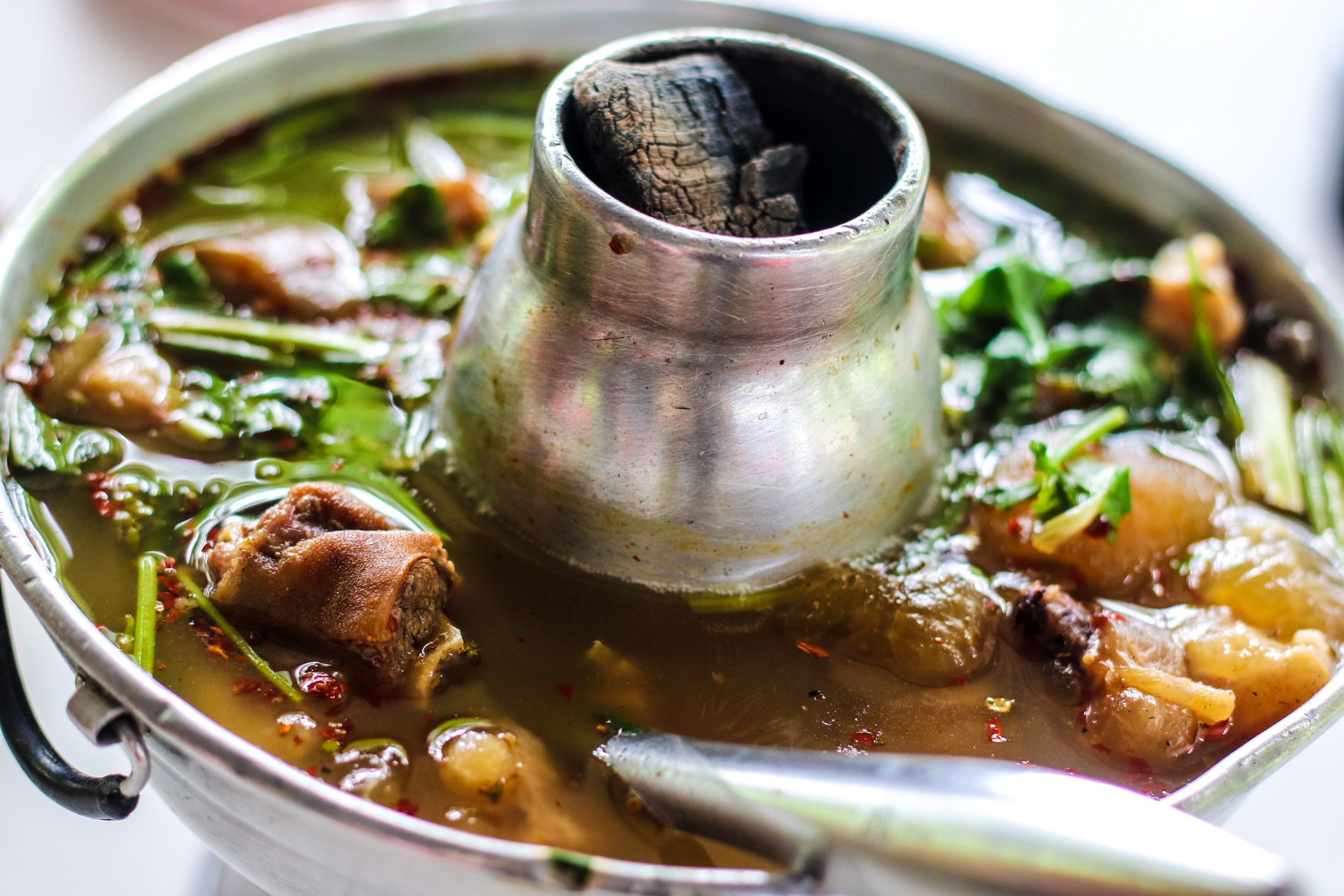
Photo: Eating Thai Food
Some soups comfort. Sup Hang Wua restores. A big metal fire pot arrives at the table still bubbling over charcoal, full of tender pieces of oxtail in a clear broth that smells of warm spices, tomato and fresh herbs. The first spoonful is sour and savoury and gently hot; the second carries cinnamon, star anise and black pepper underneath the lime and chilli. It is a Thai Muslim classic, a soup with Arab and Persian spice routes in its bones, made completely Thai by the herbs, the chillies and the way it is eaten — communally, with rice, while the pot stays hot in the middle of the table.
A soup that travelled, then settled
Thailand's Muslim communities, especially in Bangkok and the south, have cooked with dried spices for centuries — traders from Arabia, Persia and India brought cardamom, cinnamon, cloves, star anise and cumin long before they were common in central Thai kitchens. Oxtail soup in this style is a cousin of Arab and Indonesian sop buntut, but the Thai version took its own road. The broth stays clear rather than thick, the spice is warm rather than fiery-hot on its own, and the final seasoning is pure Thailand: lime juice, fish sauce, fresh chillies, coriander and sawtooth herb, added bright at the end. The result is not a curry and not a tom yam — it is its own thing, and regulars will travel across a city for a good pot of it.
Why oxtail?
Oxtail is a patient cook's cut. The meat is marbled, the bones are rich, and the connective tissue melts over a long, slow simmer into a broth with real body that somehow stays clean and clear. Rush it and the meat is tough; give it two to three unhurried hours and the meat slips from the bone, the broth tastes deeply beefy, and a spoonful coats your lips just slightly. In soup shops the tails are simmered until tender well before opening, then finished to order with tomato, onion and herbs — so what arrives at your table tastes freshly made, even though the hard work started at dawn.
What goes in the pot
- The oxtail: cut into short joints, well rinsed — the richer and meatier the pieces, the better the soup
- The warm spices: cinnamon stick, star anise, cardamom, cloves, black peppercorns and bay, toasted lightly so the broth perfumes rather than shouts
- The base: onion, tomato and sometimes potato, simmered into the broth for sweetness and body
- The Thai finish: lime juice, fish sauce, fresh bird's chillies, coriander, sawtooth herb and spring onion, stirred in at the end
- The crunch: crispy fried shallots scattered over the top, a signature of Thai Muslim cooking
- On the table: steamed rice, extra lime wedges, chilli flakes and a fiery dipping sauce for the meat in many shops
Clear broth, layered flavour
The skill in Sup Hang Wua is layering without clouding. The spices go in whole, early, so their warmth soaks into the meat and broth during the long simmer. The tomato and onion melt down and sweeten the pot. Then, right at serving, the bright layer lands — lime for sourness, chillies for heat, fresh herbs for perfume, fried shallots for a savoury crunch. Hot, sour, salty, warmly spiced and rich, all at once, without any single note taking over. Served in a fire pot over a charcoal brazier, it stays at a bare simmer while you eat, and the last spoonful — by then well married with the herbs — is often the best one.
How it is eaten
Order it as the centre of a meal, not a starter. Bowls of rice arrive, the pot goes in the middle, and everyone fishes out a piece of oxtail, spoons broth over their rice, and adjusts their own bowl — more lime, more chilli, more shallots. The meat is eaten with fingers or coaxed off the bone with a spoon; nobody stands on ceremony over an oxtail pot. A plate of rice, a simple stir-fried vegetable and this soup make a complete Thai Muslim lunch, and in Bangkok and the Deep South there are beloved shops that serve almost nothing else, to queues of people who have eaten there for decades.
Home recipe: Sup Hang Wua (serves 4–6)
- Prepare the oxtail: rinse 1.2kg oxtail pieces, cover with cold water in a large pot, bring to the boil and boil hard for 5 minutes. Drain, rinse the pieces and the pot — this first boil keeps the final broth clear. Return the oxtail to the pot with 2.5 litres fresh water.
- Toast the spices: in a dry pan, lightly toast 1 cinnamon stick, 2 star anise, 4 cardamom pods, 4 cloves, 1 teaspoon black peppercorns and 2 bay leaves until fragrant, about a minute. Add them to the pot with 1 large onion, quartered, and 2 tomatoes, quartered.
- Simmer low and slow: bring to a gentle boil, skim any foam, then lower to the barest simmer. Cook uncovered for 2½–3 hours, until the meat is very tender and starting to pull from the bone. Top up with a little water if it drops much. Do not let it boil hard — a rolling boil clouds the broth and toughens nothing but your patience.
- Season the pot: add 3 tablespoons fish sauce and 1 teaspoon salt, taste, and simmer 10 more minutes. The broth should taste rich, warmly spiced and savoury, ready for its bright finish.
- Finish Thai style: stir in the juice of 2 limes, 2–4 fresh bird's chillies, lightly crushed, a handful of coriander leaves, 4 sawtooth herb leaves, sliced, and 2 spring onions, cut into short lengths. Taste again — sour first, then salty, warm spice underneath, heat building gently. Adjust lime, fish sauce and chilli to your table's taste.
- Serve: ladle into a large serving bowl or a fire pot if you have one, scatter 3 tablespoons crispy fried shallots over the top, and bring it to the table bubbling if you can. Serve with steamed jasmine rice, extra lime wedges and chilli flakes alongside.
The home-cook's rule: keep the lime and fresh herbs out until the end. The long simmer builds the warm, spiced depth; the last two minutes build the brightness. A Sup Hang Wua that tastes flat almost always needs lime and shallots, not more spice.
Why it endures
Sup Hang Wua endures because it tells Thailand's bigger story in a single pot: spice routes from Arabia and Persia, a humble cut given time and respect, and a Thai cook's instinct to finish something rich with something bright. It is feast food and comfort food at once — the pot a Bangkok family orders when someone needs feeding properly. Make it on a slow weekend, keep it bubbling in the middle of the table, and you will understand why this soup has kept its place for generations.


Comments
Post a Comment