Southern Lao Food: Champasak, Pakse and the Coffee Country Table
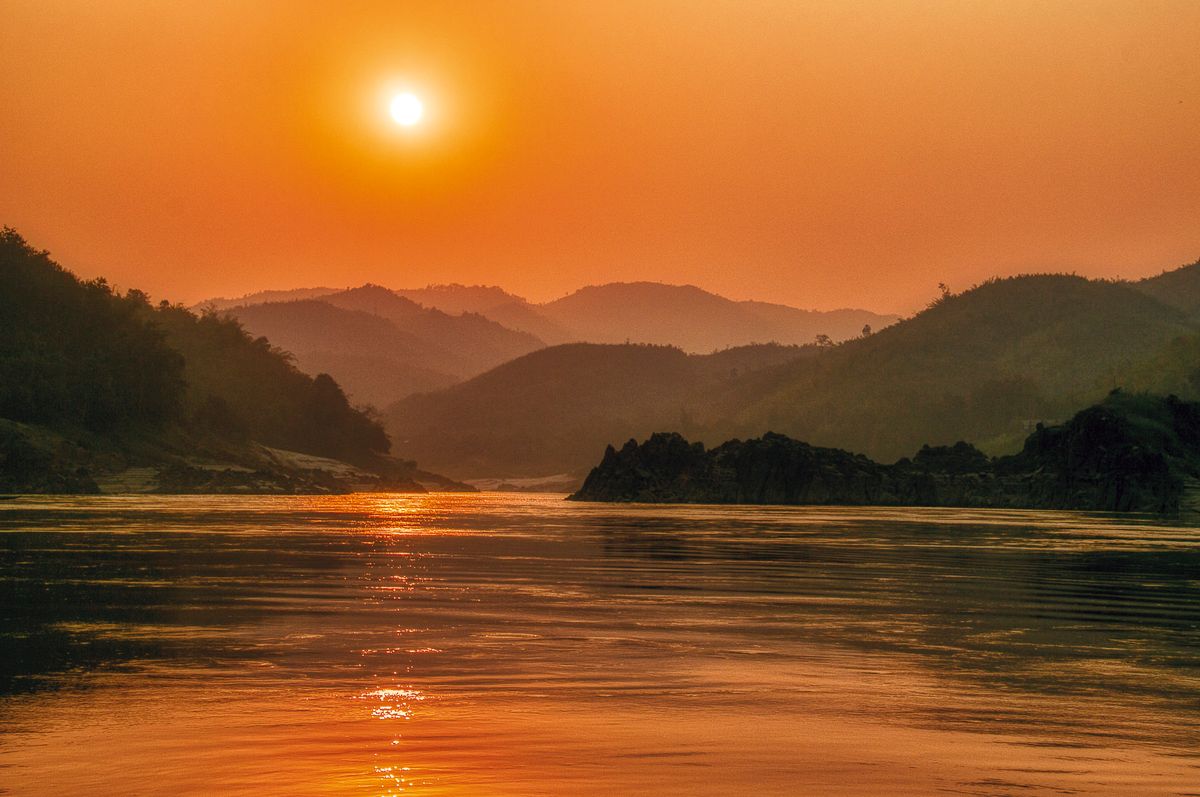
Follow the Mekong south from Luang Prabang and the Lao table slowly changes its accent. The north is forest and mountain: bitter herbs, wild pepper, padaek with real depth, almost nothing sweet. The south is river and plateau: a wider, greener landscape where the Mekong spreads out into islands, coffee grows on red volcanic soil, and Khmer and Vietnamese history has layered other kitchens on top of the Lao one. Southern Lao food is not softer exactly — the chillies are still honest and the sticky rice still rules — but it is broader, and shaped by two things the north lacks: an enormous river at its most abundant, and a highland growing some of the best coffee in mainland Asia.
This guide is the map of that table: Pakse, the commercial heart of the south; the Bolaven Plateau above it, where coffee is king; Champasak town, the old royal seat in the shadow of Wat Phou; and Si Phan Don, the 4,000 Islands, where the river slows down and so does everyone eating beside it.
How the South Differs
Three things set the southern table apart from the northern one.
The river is richer here. The Mekong in the south is wide, slow and deep, joined by the Xe Don at Pakse and spreading into the braided channels of Si Phan Don further down. That means fish — big fish, many species, all year — and a cooking style that leans toward the river's bounty: grilled whole fish, fish larb worked fine, clear fish soups, fermented fish in every state from fresh sauce to aged paste. Where the north seasons with the forest, the south seasons with the river.
The neighbours are closer. Champasak was Khmer country long before it was Lao — Wat Phou was a Khmer temple centuries before Angkor's greatest building — and Cambodian influence runs under southern Lao cooking like a watermark: a shared love of fermented fish, herbs used with a slightly different hand. Vietnam is just over the Annamite range, and Pakse has absorbed Vietnamese dishes so completely that many southerners no longer think of them as foreign. Add the French colonial layer — Pakse was a French administrative town, and the plateau's coffee farms are a colonial inheritance — and you get a table with more accents than anywhere else in Laos.
The plateau changes the climate. Climb an hour from Pakse and you are on the Bolaven Plateau, 1,000 metres and more above the heat, where the air turns cool, the soil runs red, and coffee, tea, cardamom and fruit grow in abundance. The south is the only part of Laos where "up in the hills" means coffee country rather than forest foraging, and that shapes everything from breakfast rituals to what a roadside stall sells you at noon.
The constants hold, though. Sticky rice is still the meal and everything else is accompaniment. Padaek still does the deep seasoning. Jeow still sit on the table. Laap is still the dish of celebration. The south plays the same music — it just has a bigger band.
Pakse: The Trading Town Table
Pakse — "mouth of the Xe" — sits where the Xe Don river meets the Mekong, and it has always been a place of exchange: Lao, Khmer, Vietnamese, Chinese and French traders all left something on its table. It is the natural kitchen capital of the south, and the best place to understand southern Lao eating is its morning market, Talat Dao Heuang, down by the Xe Don bridge. Go at six. The market is huge, sprawling and entirely practical — this is where the south actually shops — and its food stalls serve the city's real breakfast.
That breakfast is often khao piak: the thick, chewy hand-cut rice noodles in a gentle broth, here as everywhere in Laos the comfort bowl of the morning, but in Pakse eaten with a southern generosity — more herbs on the side, pork or chicken, sometimes a Vietnamese-influenced lightness to the broth. Around it, the market stalls run the full southern morning repertoire: grilled pork and chicken skewers blistering over charcoal, sticky rice baskets, noodle soups of several families, rice porridge, fried dough sticks, and coffee — always coffee — dripping through cloth bag filters into glasses sweetened with condensed milk.
Lunch and evening belong to the river. Pakse's fish restaurants, strung along the Mekong and Xe Don banks, grill the day's catch simply — whole river fish rubbed with salt, stuffed with lemongrass, laid over charcoal until the skin crisps — and serve it with jeow, herbs and rice. Fish laap here is a point of pride: poached Mekong fish worked with lime, padaek, khao khua and dill until it turns light and almost fluffy. The riverside restaurants near the old French quarter are pleasant, but the neighbourhood kitchens are where the cooking is most itself.
The Vietnamese layer deserves its own paragraph, because in Pakse it is not a layer so much as a second foundation. Pakse grew as a trading post with deep Vietnamese connections — merchants, craftsmen, and later refugees across several generations — and the city eats accordingly. Phở and its cousins are ordinary morning food, sold by Vietnamese and Lao-Vietnamese families from stalls that have poured the same broth for decades. Bánh mì stalls press crisp baguettes — the French loaf by way of Saigon, filled with pâté, grilled pork, herbs and pickles. Che desserts, Vietnamese coffee culture layered over the Lao one, and entire streets of Vietnamese-run eateries make Pakse the one Lao city where asking "Lao or Vietnamese tonight?" is a genuine daily question. The blog's Vietnamese Food tab follows that kitchen in full; here, just know that in the south it is woven in, not pasted on.
The Bolaven: Coffee Country
An hour east and a thousand metres up, the Bolaven Plateau is the south's treasure and the reason "coffee country table" belongs in this article's title. The plateau's red volcanic soil and cool, wet climate are near-perfect for coffee, and the French saw it first: colonial planters established estates here in the early twentieth century, and coffee has defined the highlands ever since. War scattered the plantations; what grew back is mostly smallholder farming — family plots around Paksong, the plateau's main town, where arabica grows at altitude on the better land and robusta fills the lower slopes, tended by Lao, Laven (the plateau is named for the Laven people), Alak, Katu and other highland communities whose villages line the plateau roads.
Lao coffee, at its best, is genuinely good: the high-grown arabica is mild, clean and chocolatey, and for years most of the crop travelled quietly through bulk buyers. A cooperative movement — smallholder groups around Paksong, most famously — has spent two decades teaching farmers to pick ripe, process carefully and sell their own beans under their own name, and a cup poured in Paksong today can be excellent by any standard.
How it is served is its own ritual. The classic Lao coffee is dark-roasted, often with a little corn, soy or sugar worked into the roast in the old style, brewed strong by pouring hot water through a cloth bag filter — the bag blackened by years of use — and served with a thick spoonful of sweetened condensed milk at the bottom. In market stalls that is the cup, and it is more dessert than beverage. In Paksong and Pakse's newer cafés you will also find the plateau's clean arabica brewed properly and served black, and both cups tell the truth about this country: one is history, the other is ambition.
The plateau table around the coffee is roadside and generous. The roads up from Pakse are lined with grilled chicken and sticky rice culture at its best: whole chickens butterflied and grilled over wood charcoal at roadside stalls, hacked into pieces, served with a fiery jeow, a basket of sticky rice and a pile of herbs — eaten at a low table while trucks roll past. It is the same ping gai and khao niao combination found across Laos and Isan, but on the plateau it comes with cool air, green views and coffee after. Waterfall stops punctuate every plateau road — Tad Fane, Tad Yuang and their sisters — and each famous falls has its cluster of stalls grilling, boiling and brewing for day-trippers, which is exactly as it should be: in Laos, a view is an excuse for a meal.

The Dishes of the Southern Table
Laap, southern style. The national dish follows the river here: fish laap is the southern signature, delicate and dill-forward, but meat laap holds its celebration place, dressed with the same lime, padaek, khao khua and herbs as the northern version and judged by the same standard — balance, freshness, generosity. Our full Larb guide covers every style in depth; the southern note is simply that the fish version reaches its highest form on this river.
Grilled river fish — ping pa. The defining southern plate. A whole Mekong fish, salt-rubbed, lemongrass-stuffed, grilled over charcoal and eaten communally, flakes pulled away with the fingers and wrapped with herbs or dragged through jeow. In the south this is not restaurant food so much as the default celebration of having fish, which is most days. Nothing on it is wasted: the cheeks are the prize, the skin should crackle, and the head goes to the eldest or the guest.
Som tam, Lao style, in the south. Green papaya pounded in the mortar with padaek, lime, chillies, tomatoes and fermented field crab or eggplant — the Lao original of the dish, funkier and more bitter than the sweet Thai version most visitors know first. In the south it is market and roadside food, eaten with sticky rice and grilled chicken, and southern stalls pound it with the same ferocity as the north. The fermented crab version, tam with puna (the little rice-field crabs preserved in brine), is a southern and Isan shared pleasure — an acquired taste that, once acquired, becomes a craving.
Fermented fish, in depth. The north has padaek; the south has padaek plus the wider family of Mekong preservation: fish fermented in rice bran until sour, whole small fish aged in salt, sauces of different ages for different jobs. On a river that floods and retreats, preservation is survival knowledge, and southern cooks deploy the funky end of the spectrum with confidence — a sour fermented fish folded into a soup, a fierce jeow built on aged fish. Respect it and learn it gradually; the south rewards the student.
Jeow of the south. The dips follow the produce: jeow of grilled river fish pounded with chilli and herbs; jeow mak len, the roasted tomato and chilli standard; eggplant jeow, smoky from the coals; and plateau versions using highland chillies that grow fat and fiery in the cool air. A southern meal without at least one jeow is as unfinished as a northern one.
Khao piak and the noodle mornings. Already met at Pakse's market, but worth stating as a southern principle: the south starts its day in the noodle stall, and between Lao khao piak, Vietnamese-influenced bowls and the porridge-and-grill stalls, the southern breakfast is the most varied in the country.

Si Phan Don: Eating Where the River Rests
Far south, nearly touching Cambodia, the Mekong reaches its widest and strangest: a stretch where the river braids into countless channels around thousands of islands — Si Phan Don, the 4,000 Islands — before gathering itself for the Khone Falls, the great rapids that stopped French gunboats and still stop boats today. The main travellers' islands, Don Det and Don Khon, joined by an old French railway bridge, and the larger, quieter Don Khong upriver, run on river time.
Eating here is guesthouse eating, and that is not a criticism. The island kitchens — family-run restaurants on wooden decks over the water — cook what the river and the garden give: fish laap and grilled fish from that morning's nets, clear fish soups, papaya salad, stir-fries from the garden behind the house, sticky rice from the family's own fields. "Fresh fish" here means something specific and literal: the fish was swimming at dawn, because the islands' fishermen work the channels nightly and sell to the kitchens in the morning. Ask what came in today and eat that; it is the whole menu philosophy of the islands in one sentence.
The islands' famous ritual is the sunset dinner over the west-facing water, where in the right season the end of the day comes with the chance of seeing the Irrawaddy dolphins that live in the deep pools below the falls near the Cambodian border — boatmen from Don Khon and Don Det take visitors out at golden hour, and the riverside restaurants time their evenings to the boats coming back. Dolphin or no dolphin, dinner at the water's edge with the river sliding past and a grilled fish on the table is the Si Phan Don experience in full, and it needs nothing added to it.
Practical notes, plainly: island kitchens cook to order from family stoves, so food takes time — order before you are hungry. Supply boats govern variety, and the islands keep early hours. This is the Lao south at its most relaxed, and its food is best met at the same pace.

Champasak Town and Wat Phou
West across the river from Pakse's side, small Champasak town was once a royal capital in its own right — seat of a southern Lao kingdom — and it keeps a quiet dignity: a main street of old Lao and French-era houses along the Mekong, slow traffic, and the reason everyone comes, eight kilometres south: Wat Phou, the Khmer mountain temple, older than Angkor, climbing its hillside in terraces toward a sacred spring, recognised by UNESCO and still a living place of worship.
The food stops here are modest and honest, best thought of as part of the journey rather than a destination. The town's riverside restaurants serve the standard southern repertoire — grilled fish, laap, soups, som tam — and staying overnight instead of day-tripping is the move: Champasak at dawn, with mist on the river and the temple mountain behind, is one of the south's loveliest hours, and breakfast afterwards is khao piak and coffee taken slowly. Roadside stalls between town and temple sell grilled meats, fruit and drinks; the celebrated Champasak oranges and pomelos appear in season. Nobody comes to Champasak to eat, and everybody eats well anyway — that is the southern table's general rule.
Fruit of the Plateau and the Seasons
The south eats seasonally in a way the market makes obvious. The Bolaven's altitude grows what the lowlands cannot: durian from plateau orchards, rich and reputed among those who chase it; mangosteen and rambutan in the rains; pomelo and oranges around Champasak; avocados, passion fruit and strawberries in the cool months at the highest farms — a market basket in Paksong in December looks like no other in Laos. Coffee-cherry season, roughly the last quarter of the year into January, turns the plateau red: cherries picked by hand, village roads edged with drying beds and patios of beans, and the smell of fermenting fruit over everything. Visit then and you taste the crop at its source; visit in the cool dry months after and you drink it at its best, in the cafés that roast it themselves.
The river has its own calendar — fish fattest and most plentiful as the waters fall after the rains, leaner in the high flood — and the southern cook's year runs on both clocks at once: the plateau's harvests and the Mekong's moods. A southern table in October and a southern table in April are cousins, not twins.
Where to Go From Here
This article is the doorway, not the whole house. The Southern Lao Food tab on this blog takes each of these threads to full length — the dishes, the towns, the coffee, the river — one plate and one place at a time. The Northern Lao Food guide shows where this cuisine came from, the Isan tab crosses the river to the southern table's closest kin, and the Vietnamese Food tab follows Pakse's second foundation back to its source. Start anywhere. The south will feed you while you decide.


Comments
Post a Comment