Som Tam: The Salad That Fights Back
There is a sound that means lunch across the whole of Isan: the pok pok pok of a wooden pestle working a clay mortar, rising from market stalls, shophouse fronts and village yards from Udon Thani to Ubon. Inside the mortar is som tam — shredded unripe papaya pounded with lime, chilli, palm sugar and something fermented and funky — the northeast's defining dish and Thailand's most famous salad. On the Lao side of the Mekong it answers to tam mak hoong, and the argument over who owns it has been happily unresolved for generations. It is sour, salty, sweet and as hot as you dare, and it is eaten the way the region eats everything: together, with sticky rice, straight from shared plates.
Pounded, Not Tossed
Som tam is built in the mortar, not mixed in a bowl. Garlic and chillies go in first and get crushed; long beans snap in segments; then the dressing — lime juice, sugar, fish sauce or pla ra — and finally the papaya itself, shaved into ribbons with a knife worked directly over the mortar or shredded with a peeler. The pestle doesn't mash so much as bruise and turn, bruise and turn, until every strand is coated and slightly softened but still snapping with crunch.
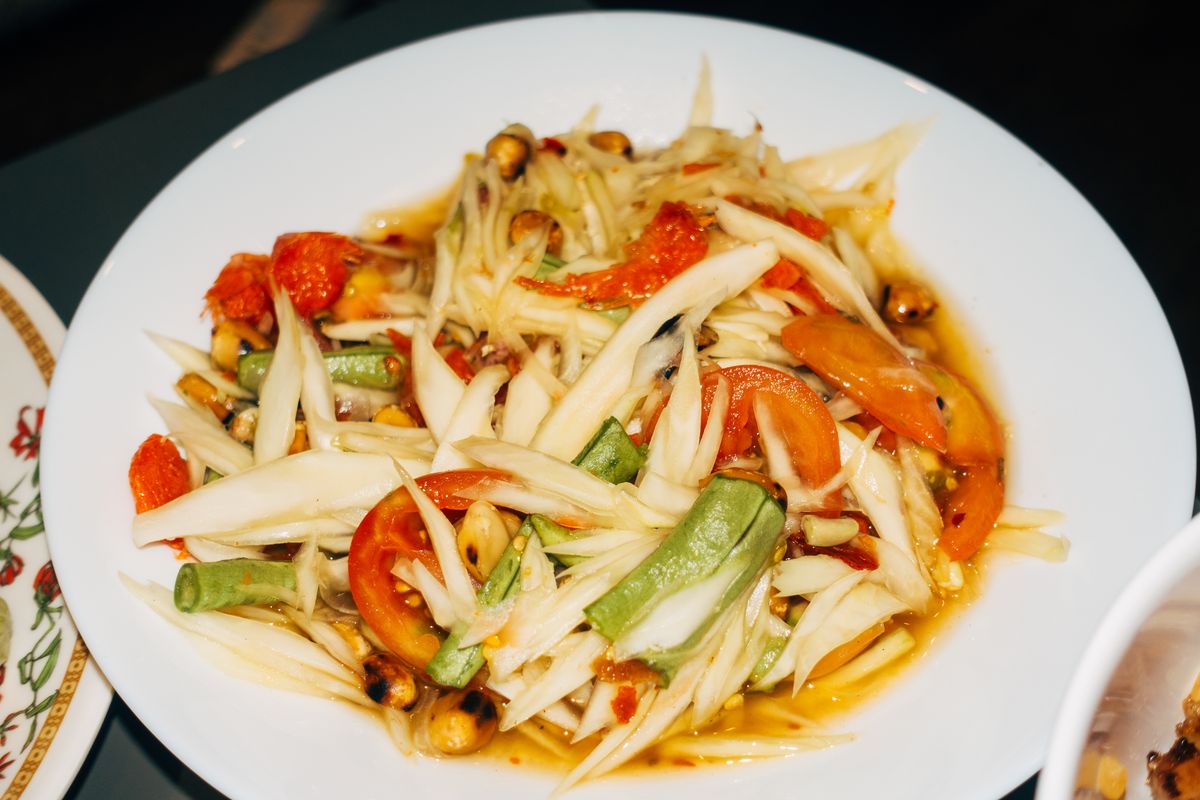
The papaya matters. It must be properly green: firm, pale, almost flavourless on its own, a crisp vehicle for the dressing rather than a fruit. Ripe papaya would collapse into jam. Tomatoes go in near the end for juice and colour, peanuts for crunch, dried shrimp if the shop's style includes them. The cook tastes constantly — som tam is seasoned by tongue, never by recipe — and the balance she is chasing is a four-way tug between sour, hot, salty and sweet where no single note wins.
Tam Lao, Tam Thai, and the Great Divide
Order som tam anywhere in Isan and it arrives as tam lao: dressed with pla ra, the fermented river fish that gives the salad its deep, earthy bass note, often with fermented field crab (pu dong) adding its own salty punch. This is the original — sharp, dark, unapologetic.
The version most of the world knows is tam thai, the Bangkok adaptation: fish sauce instead of pla ra, more sugar, peanuts always, dried shrimp, and the funk turned politely down. Neither side concedes anything. Bangkok finds the Isan version barbaric; Isan finds the Bangkok version a dessert. A visitor's honest path is to try both — start with tam thai if you're new, then graduate to a proper tam lao at a busy Isan stall and taste what the whole region is actually about.
A Whole Family of Tam
Papaya is only the most famous thing that goes into the mortar. Tam means pounded, and Isan pounds nearly everything: tam taeng with cucumber, tam tua with long beans alone, tam som o with pomelo, tam phonlamai with mixed fruit, tam sua where rice noodles join the chaos, even tam of raw corn in season — sweet, milky kernels that have become a modern favourite. If it is crisp and can survive the pestle, someone in the northeast is serving it as tam, and half the fun of a market wander is finding the version you have never seen before.

How to Order Without Regret
Heat is the trap for the unwary. Som tam chillies are counted, not estimated — the vendor will ask pet mai? and hold up fingers, and the wise answer for a first bowl is one or two, because Isan three is Bangkok five. Pet nit noi (just a little spicy) is a phrase worth learning early and using without shame; you can always add, you cannot subtract.
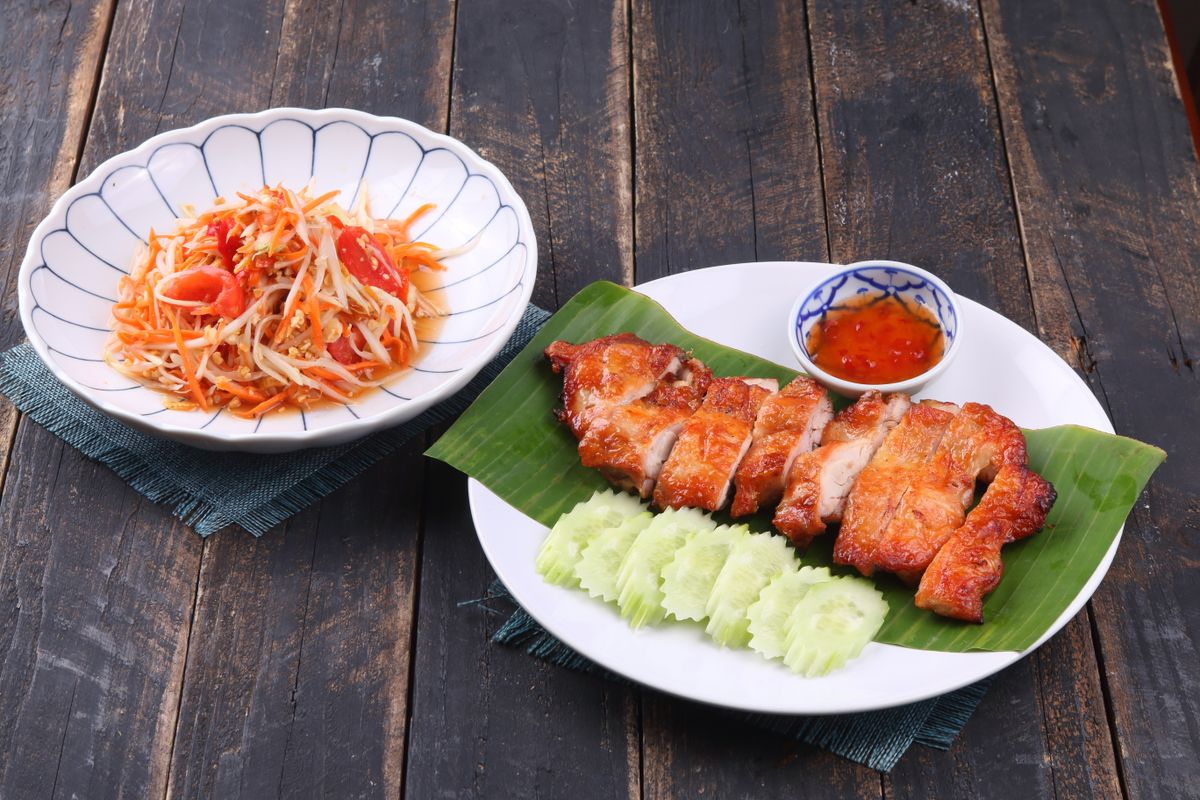
Then eat it properly: som tam is one corner of the classic Isan table, not a solo act. A ball of sticky rice (khao niao) pinched and used to scoop, gai yang grilled chicken with its charred edges, maybe a larb or a bowl of tom saep alongside, everything shared and everything balancing the salad's fire. A plate at a street stall costs roughly what any good one-dish lunch costs in the region — modest money for the full experience — and the sticky rice refills are the point, not an extra.
Sweet, sour, salt and fire, pounded to order in about ninety seconds. Som tam is not a side salad. In Isan, it is the main event — and the mortar never lies about it.


Comments
Post a Comment