Prahok: Cambodia's Fermented Fish Paste, Explained
Prahok: Cambodia's Fermented Fish Paste, Explained
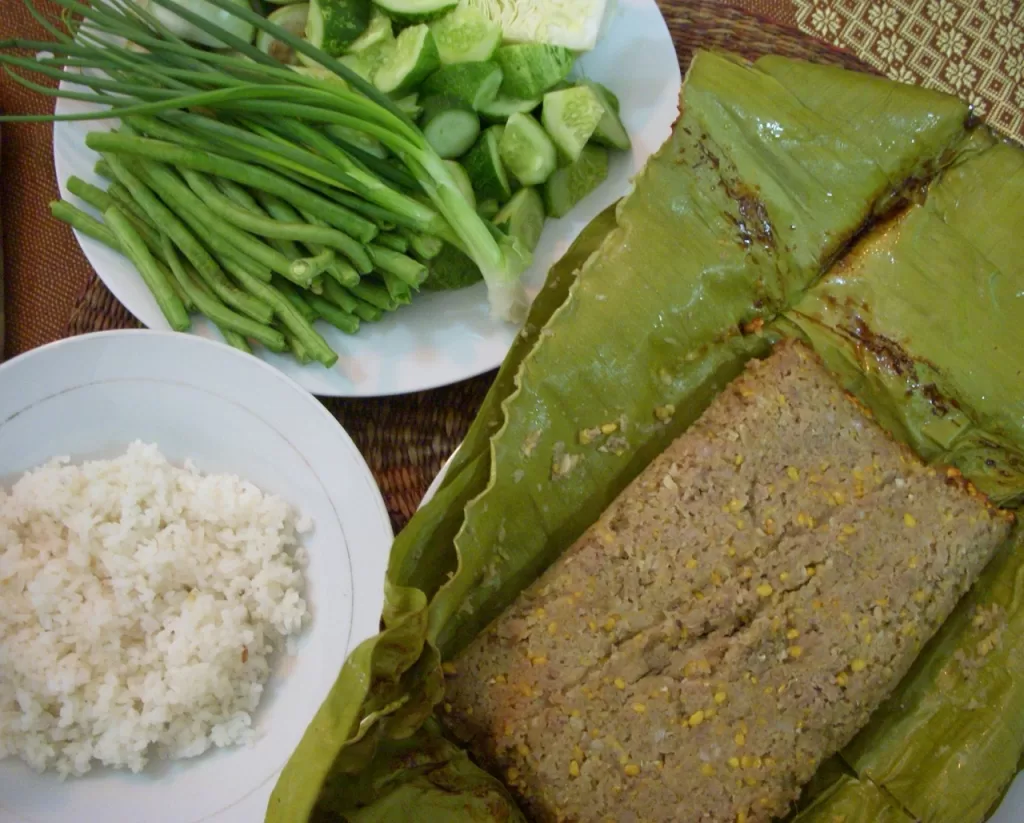
Photo: Paxse via More Than Temples
Every Cambodian kitchen knows prahok, and most Cambodian cooks would not want to cook without it. Prahok is a grey-brown paste of salted, fermented freshwater fish — pungent, deeply savoury and used a spoonful at a time to give Khmer soups, curries, dips and stir-fries their unmistakable depth. Foreigners sometimes call it "Cambodian cheese," which is not a bad nickname at all: like a strong cheese, it can startle you the first time you meet it, and then, cooked into the right dish, it wins you over completely. There is an old saying in Cambodia that runs "no prahok, no salt" — meaning that without prahok, a meal has no real seasoning at all. This is the ingredient to understand if you want to understand Khmer food.
Born on the Tonle Sap
Prahok exists because of a lake that behaves like no other. The Tonle Sap, Cambodia's great lake, swells enormously in the wet season, and when its river reverses and the waters fall again, fish pour out in astonishing numbers. The peak of that migration, in December and January, is prahok season: along the riverbanks and in fishing villages, families and whole communities clean, salt and pound tonnes of small fish in a few busy weeks, packing away enough fermented paste to flavour — and, in lean times, to help feed — the household for the year ahead. It is preservation from the age before refrigeration, traced back to the Angkorian era, and it turned a short season of abundance into a store of protein and flavour that keeps for months, and for the finest jars, up to two or three years.
Two main types
- Prahok ch'oeung: made from small fish, classically trey riel, the little mud carps of the Tonle Sap and the rivers. The tiny bones stay in, so cooks often use this type by stirring a spoonful into hot water, letting it settle and seasoning the dish with the fragrant "prahok water" that results
- Prahok sach: made from larger fish — snakehead and other good freshwater fish — that have been filleted, so there are no bones to worry about. This is the prahok that gets finely chopped and eaten more directly: folded into dips, fried with pork or beef, or wrapped in banana leaf and grilled
Between those two families there is endless local variation. One village's prahok is chunkier, another's smoother; one maker ferments briefly for a milder paste, another waits for depth. As with padaek in Laos — prahok's close cousin across the region — every cook will tell you, quite seriously, that their favourite maker's jar is the best one.
How prahok is made
Traditional prahok-making is hard, skilled work, traditionally done over about two days and then finished by time. The small fish are beheaded, gutted and cleaned, then washed again and again — traditionally trodden and rinsed in baskets in the river — until they are white and free of oil that could spoil the ferment. The cleaned fish are pressed in baskets covered with banana leaves and weighted with stones for about a day to drain. Then comes the salt: the fish are mixed generously with coarse salt, spread on mats to dry in the sun for a day, and, in village households, pounded in small batches in wooden mortars. The resulting paste goes into earthenware jars, set out in the sun by day and covered at night. Each day, the liquid that rises to the top is drawn off — that liquid itself becomes fish sauce, teuk trey. After about a month, when no more liquid forms, the prahok is ripe; left longer, for several months or more, it grows stronger, darker in flavour and more prized.
How it tastes — honestly
Honestly? A jar of prahok smells strong. Fermented, fishy and earthy, it announces itself across a market row, and prahok-making villages are famous for it. But smell is only half the story. In a cooked dish, prahok does not shout "fish" — it melts into the background and makes everything else taste more complete: saltier in a rounder way, deeper, more savoury, with a long, satisfying finish that plain salt or clear fish sauce cannot give. Eaten as the star, grilled in banana leaf or pounded raw with lemongrass, lime and chilli, it stays bold and proudly itself. The golden rule for newcomers is simple: start with a little, and start cooked. A spoonful simmered into a soup is prahok at its friendliest.
Where you will meet it
Once you know prahok, you find it everywhere in Khmer cooking. It seasons samlor kako, the great mixed-vegetable soup, and the golden fish curry ladled over nom banh chok at breakfast. It gives fish amok part of its backbone. It is fried with pork, beef and chilli as prahok chien, wrapped in banana leaves and grilled over coals as prahok ang — the dish in our photo, served with rice and a plate of raw vegetables — and, for the confident, pounded raw with lemongrass, lime, garlic and fresh chilli as a fierce little dip for vegetables and grilled meats. Above all there is prahok ktiss, the rich, coconutty dip below: if you try one prahok dish first, make it that one.
Using it at home
Outside Cambodia, look for jars labelled prahok or Cambodian fermented fish paste in Southeast Asian grocers and online; a little jar lasts a long time in the fridge. Use a clean spoon, begin with a teaspoon rather than a tablespoon, and let cooking mellow it before you judge it. If a recipe calls for the bony style and you only have a smooth paste, simply use a little less. And if the raw jar is too much for you on day one, do what Cambodian restaurants abroad have always done — let it work quietly in the background of a soup or dip, where it deepens everything without ever being named.
Home recipe: Prahok Ktiss, the gentle first dip (serves 4 as a dip, more as part of a shared table)
- Make the paste: pound or blend 2 lemongrass stalks (white part only, finely sliced), 3 garlic cloves, 2 small shallots, 2 slices galangal, a small piece of fresh turmeric (or 1/2 teaspoon ground) and 1–2 dried red chillies, soaked, until smooth.
- Fry the paste: heat 200ml thick coconut milk in a wok or pan until its oil starts to shine on the surface. Add the paste and fry for 2–3 minutes, stirring, until deeply fragrant.
- Add the pork and prahok: stir in 250g minced pork and cook, breaking it up, until it loses its raw colour. Add 1–2 tablespoons prahok — start with 1 if this is your first jar — and stir it through well. It will smell strong for a moment, then settle into something rich and savoury.
- Round it out: add another 150ml coconut milk, 1 tablespoon palm sugar and 1 tablespoon tamarind water (or a squeeze of lime). Simmer gently for 5–7 minutes, until the dip is thick, glossy and just holding soft peaks. Stir in 2 makrut lime leaves, finely shredded, and a small handful of crushed roasted peanuts if you like.
- Taste and balance: it should be salty and deep first, then creamy, faintly sweet and warm. Add fish sauce for salt, a pinch more sugar if the prahok is very fierce, or lime if it feels heavy.
- Serve the Cambodian way: spoon the warm dip into a bowl in the middle of the table, with steamed rice and a generous plate of raw vegetables for dipping — cucumber, long beans, cabbage, Thai eggplants, carrots and herbs. Scoop, crunch, repeat.
The first-timer's rule: cooked, coconut and company. Prahok simmered into coconut milk with pork and aromatics, then scooped up with cool, crisp vegetables, is a completely different experience from the raw jar — mellow, rich and very easy to love.
Why it matters
Prahok is more than a seasoning. It is the Tonle Sap stored in a jar: a fishing culture's answer to a flood-and-drought year, a family's winter protein, a village economy and a flavour that has defined Khmer cooking for centuries. To cook Cambodian food without it is possible, but something essential — the deep note underneath the lemongrass, turmeric and herbs — goes missing. So give the grey paste a chance. Buy a small jar, simmer a teaspoon into a soup, fry up a pan of prahok ktiss for friends, and do not be surprised if, like generations of Cambodian cooks before you, you end up insisting that no meal is properly seasoned without it.


Comments
Post a Comment