Ohn No Khao Swe: Coconut Chicken Noodles
Ohn No Khao Swe: Coconut Chicken Noodles
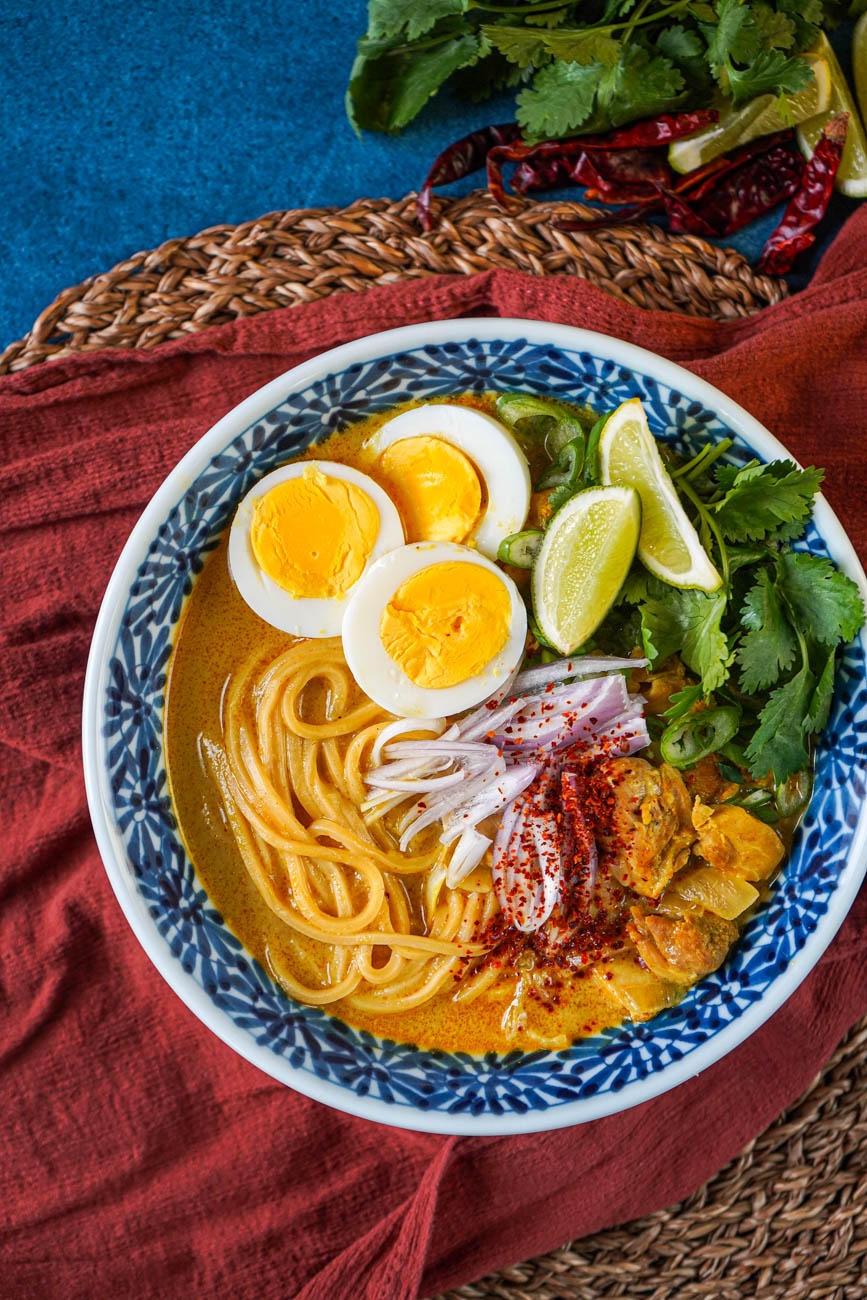
Photo: Tara's Multicultural Table
Some noodle soups comfort you quietly. Ohn no khao swe wraps you up. Wheat noodles sit in a golden coconut curry — rich, gently spiced, thickened the Burmese way with chickpea flour — topped with tender chicken, slices of boiled egg, raw shallots, fresh coriander, a squeeze of lime and a shower of chilli. It is Myanmar's beloved coconut chicken noodle soup, sold in teashops and market stalls from Yangon to Mandalay, eaten for breakfast, lunch and every cheerful occasion in between. If mohinga is Burma's national breakfast, ohn no khao swe is its favourite celebration bowl — the one brought out for birthdays, donations and family gatherings, and the one nobody ever refuses a second helping of.
A soup with a chickpea secret
What sets ohn no khao swe apart from other coconut noodle soups in the region is how the broth gets its body. Instead of relying on coconut milk alone, Burmese cooks whisk in chickpea flour — besan — which thickens the soup to a silky, spoon-coating richness and adds a quiet, nutty depth. It is the same trick behind Shan tofu, and it makes the broth feel luxurious without being heavy. The curry base is familiar and fragrant: onion, garlic, ginger and lemongrass, turmeric for the golden colour, paprika or chilli powder for warmth, and fish sauce for savoury depth. Chicken simmers in that base until tender, coconut milk rounds everything out, and the result is a soup that is creamy, golden and deeply satisfying — mild enough for everyone at the table, with the heat added at the end, by each eater, to taste.
The noodles, and why wheat matters
Unlike most Burmese noodle dishes, which lean on rice noodles, ohn no khao swe is traditionally made with wheat noodles — khao swe itself comes from the Shan word for noodles. Fresh egg noodles are the classic choice in Myanmar: springy, golden strands that hold up beautifully in the thick broth and carry the curry in every bite. Dried wheat noodles or good spaghetti-style egg noodles work well at home. The noodles are cooked separately and drained, then ladled over with the hot curry just before serving, so they stay springy and never swell into the soup. It is a small detail that makes a big difference — the bowl should feel like noodles in a rich curry, not a stew that happens to contain noodles.
The toppings are not decoration
An ohn no khao swe stall lays out its toppings like a small festival, and every one of them has a job:
- Boiled egg: sliced or halved on top — rich, familiar, and part of the dish's identity
- Raw shallots or red onion: thinly sliced, for sharp, fresh bite against the creamy broth
- Fresh coriander: a generous handful, for green brightness
- Lime wedges: squeezed over at the table — the acidity lifts the coconut and is absolutely essential
- Chilli flakes and chilli oil: added to taste, so the bowl can be gentle or fiery as each eater wishes
- Crispy fried noodles: a crunchy tangle scattered over the top in many shops — the beloved contrast of crisp against soft
- Fried garlic and shallots: golden, fragrant crunch for those who want more of it
The ritual is the same as everywhere in Myanmar: taste the bowl as it arrives, then adjust it yourself — more lime, more chilli, more shallot — until it is exactly yours.
A bowl for good occasions
Ohn no khao swe has a happy reputation in Myanmar. It is the dish of alms-giving feasts and birthday breakfasts, of office treats and school celebrations — food you make in a big pot, for many people, on a good day. Vendors set up at street corners in the cool of the morning, steam rising from the pot, eggs lined up ready to slice. Because the curry keeps and reheats well, and the toppings are prepared fresh, it suits a crowd better than almost any other noodle soup in the country. To eat a bowl at a morning stall in Yangon — noodles, golden curry, egg, lime, chilli, a glass of plain tea alongside — is to understand something essential about Burmese food: generosity is an ingredient.
Home recipe: Ohn No Khao Swe (serves 4)
For the curry soup:
- 600g boneless chicken thighs, cut into bite-size pieces
- 2 tablespoons chickpea flour (besan)
- 400ml coconut milk
- 600ml chicken stock or water
- 1 large onion, finely chopped
- 4 garlic cloves, minced
- 1 tablespoon grated ginger
- 1 stalk lemongrass, bruised and cut into pieces
- 1 teaspoon ground turmeric
- 1–2 teaspoons paprika or mild chilli powder
- 2 tablespoons fish sauce, plus more to taste
- 1 teaspoon sugar
- 3 tablespoons neutral oil
- Salt, to taste
For the bowls and toppings:
- 400g fresh or dried wheat egg noodles
- 4 eggs, hard-boiled, peeled and halved
- 2 small shallots or 1 small red onion, very thinly sliced
- Fresh coriander leaves, a good handful
- 2 limes, cut into wedges
- Chilli flakes or chilli oil, fried garlic, and a handful of crispy fried noodles (optional), to serve
- Marinate and start the curry: season the chicken with a pinch of salt and half the turmeric. Heat the oil in a large pot over medium heat, add the onion and cook for 6–8 minutes until soft and golden at the edges. Add the garlic, ginger and lemongrass and fry for 1 minute until fragrant.
- Add the spices and chicken: stir in the remaining turmeric and the paprika, then add the chicken and cook, stirring, for 4–5 minutes until it loses its raw colour and is coated in the spiced onion.
- Build the broth: pour in the stock and bring to a gentle simmer. Cook for 12–15 minutes, until the chicken is tender. Stir in the coconut milk, fish sauce and sugar, and simmer gently for 5 minutes — do not let it boil hard.
- Thicken the Burmese way: put the chickpea flour in a small bowl and whisk in a ladleful of the hot broth until completely smooth, with no lumps. Stir this slurry back into the pot and simmer for 3–4 minutes, stirring, until the soup thickens to a silky, spoon-coating consistency. Fish out the lemongrass, taste, and adjust with fish sauce, salt or a little more sugar — it should be rich, golden and gently savoury.
- Cook the noodles: boil the wheat noodles in plenty of water until just tender and springy. Drain well and divide between 4 warm bowls.
- Assemble and serve: ladle the hot coconut chicken curry generously over the noodles. Top each bowl with a halved boiled egg, sliced shallots, coriander and crispy fried noodles if using. Put lime wedges, chilli flakes or chilli oil and fried garlic on the table, and tell everyone to squeeze, sprinkle and mix before the first bite.
The home-cook's rule: whisk the chickpea flour smooth before it goes in, and never skip the lime. A lump-free slurry is what makes the broth silky instead of grainy, and that squeeze of lime at the table is what turns a rich coconut curry into a bright, balanced bowl.
Why it endures
Ohn no khao swe endures because it is built for sharing and for joy: a golden pot of curry, springy noodles, an egg on top, and a table full of small bowls so everyone can finish the dish their own way. It is gentle enough for children, generous enough for a celebration, and comforting in a way few noodle soups manage. Make it once — silky broth, proper toppings, lime squeezed over at the last moment — and you will see why, across Myanmar, this is the bowl people cook when the day deserves something good.


Comments
Post a Comment