Malaysian Food: Where Malay, Chinese and Indian Kitchens Share One Table
Most countries in this region have a dominant kitchen and some borrowed dishes around the edges. Malaysia never worked that way. Malay, Chinese and Indian communities have cooked side by side there for centuries — in the same ports, the same markets, eventually the same cafés — and each kept its own foundations while borrowing its neighbours' ingredients, techniques and appetites. The result is not fusion in the modern restaurant sense. It is a shared table where three complete cuisines sit down together, plus a fourth — the Peranakan or Nyonya kitchen — that grew in the space between two of them.
That is why a single Malaysian day can run like this: kaya toast and kopi at a Chinese-run coffee shop, a Malay banana-leaf parcel of nasi lemak at ten, Indian roti canai with dhal for lunch, a Penang char kway teow at a hawker stall in the evening, and a curry laksa to finish, eaten standing in the rain because the stall was too good to skip. Nothing about that day is unusual. It is just how Malaysia eats. This guide walks through the layers one at a time, so when you sit down at that table you know whose cooking is in front of you — and what to order next.
The Kopitiam: Where the Table Is Shared
If Malaysian food has a meeting hall, it is the kopitiam — the old-school coffee shop. The name is simply Malay for it: kopi is coffee, tiam is shop, a Hokkien word. Kopitiams grew up in the mining and port towns of British Malaya, most of them run by Hainanese Chinese families who had first come to cook in colonial households and learned Western breakfast on the job. Their gift to Malaysia was a breakfast that belongs to no single community and therefore to everyone.
The classic order is small and perfect. Kopi-O is black coffee brewed strong through a cloth sock filter, sweetened unless you say kurang manis (less sweet) — and the full kopitiam code is worth learning: kopi-C means with evaporated milk and sugar, kopi peng is iced, and every regular has his exact formula. Beside it comes kaya toast: thin white bread grilled crisp, spread with kaya — a slow-cooked jam of coconut milk, eggs and sugar, sometimes tinted green with pandan — and a cold slab of butter that melts against the warm toast. And the third member of the set: half-boiled eggs, cracked into a saucer at a wobble somewhere between raw and set, broken up with soy sauce and white pepper, and used as a dip for the toast or eaten straight with a spoon.
Around that core, the kopitiam rents out its stalls. One corner fries noodles, another sells nasi lemak, a third steams dim sum or dishes up chicken rice. The coffee shop owner sells the drinks; the stallholders sell the food; the customers mix everything on one plastic table. That arrangement — one roof, many kitchens — is the template for Malaysian eating everywhere, from the grandest hawker centre to the smallest town kedai kopi.

The Malay Kitchen: Sambal Is the Heartbeat
The Malay kitchen is the foundation layer, and its heartbeat is sambal — chillies pounded or blended with shallots, garlic and belacan, the fermented shrimp paste that gives Malay cooking its deep, savoury undertow. Sambal is not one condiment. It is a family and a technique: fried down in oil until it darkens and sweetens for a rendang base, left raw and fierce as a dipping relish, cooked with prawns, squid, eggs or green stink beans until it coats them completely. A Malay cook is judged by her sambal the way a Lao cook is judged by her jeow.
Nasi lemak is the dish the whole country claims as its own, and we give it full treatment in its own post on this blog's Malaysian Food tab — so here, the short version. Coconut rice, a spoon of sambal, and a supporting cast of fried anchovies, peanuts, cucumber and egg, traditionally wrapped in banana leaf into a pyramid and eaten for breakfast. Everything on the plate orbits the sambal. Get the sambal right and the dish is right.
Rendang is the celebration dish: beef (or chicken) simmered for hours in coconut milk and a spice paste of lemongrass, galangal, turmeric, dried chillies and toasted coconut — kerisik — until the sauce reduces, darkens and fries the meat in its own spiced oil. Done properly it is dry, deep and almost caramelised, eaten with lemongrass-scented rice or compressed rice cakes. It keeps for days, improves in the keeping, and anchors every festive table.
And satay is the smell of a Malaysian evening: skewers of turmeric-marinated chicken or beef fanned over charcoal until the edges char, served with a thick peanut sauce, cucumber, onion and ketupat — rice cakes boiled in woven palm leaves. The town of Kajang, outside Kuala Lumpur, claims satay as its birthplace and defends the claim vigorously; everywhere else just eats it happily. Add the everyday Malay table around these — ikan bakar, fish grilled in banana leaf with sambal; asam pedas, a sour-spicy fish curry sharpened with tamarind; ulam, platters of raw herbs and vegetables for dipping, which will look familiar to anyone who has read our Lao and Isan guides — and you have a kitchen built on chilli heat, fermentation and coconut, generous and unhurried.
The Chinese Layer: Hawker Fire
Chinese migrants brought the wok, and Malaysia has never given it back. The Chinese layer of the table is mostly hawker food — single dishes cooked fast over ferocious heat by specialists who may make one thing for forty years.
Char kway teow is Penang's signature: broad flat rice noodles tossed in a smoking wok with dark soy, chilli, prawns, cockles, Chinese sausage, bean sprouts and chives, ideally over charcoal so the edges catch that breath of wok hei. A great plate is glossy, slightly charred, and finished in about ninety seconds; a bad one swims in oil and regret. Hokkien mee, in Penang's version, is a different animal from the Singapore dish of the same name — up north it is a soup: yellow noodles and vermicelli in a dark, prawn-and-pork stock, topped with prawns, sliced pork, egg and a spoon of chilli paste that turns the whole bowl red-gold.
Inland, Ipoh built its fame on quieter cooking: bean-sprout chicken, where poached chicken is served with the town's famously fat, crunchy bean sprouts — locals credit the limestone-filtered water — dressed in soy and sesame oil, with silky flat rice noodles (hor fun) in a clear broth alongside. Ipoh also gave Malaysia white coffee: beans roasted in margarine, brewed and served with condensed milk, smoother and sweeter than kopitiam coffee, now exported everywhere but still best drunk in the old town where it started.
Round out the layer with bak kut teh — pork ribs simmered in a peppery, garlicky herbal broth, eaten with rice, fried dough sticks and strong tea, claimed by the port town of Klang — and with chicken rice, dim sum breakfasts and wantan mee, and the Chinese contribution is clear: fire, stock, noodle and craft.

The Indian Layer: The Mamak Stall
Indian — largely Tamil Muslim — cooking gave Malaysia its most democratic institution: the mamak stall, open early, open late, often open all night, feeding taxi drivers, students and families at plastic tables with the efficiency of a small airport.
The mamak star is roti canai: a wheat dough slapped, stretched paper-thin, folded with ghee and griddled until it shatters into layers, served with dhal, fish curry or sambal for tearing and dipping. Watch the cook work the dough — spun and slapped on the steel counter — and you understand why every stall's roti tastes like its maker's hands. Its cousins fill the case beside it: roti telur with egg, murtabak stuffed with spiced minced meat, and tosai, the fermented rice-and-lentil crêpe, eaten with coconut chutney and sambar.
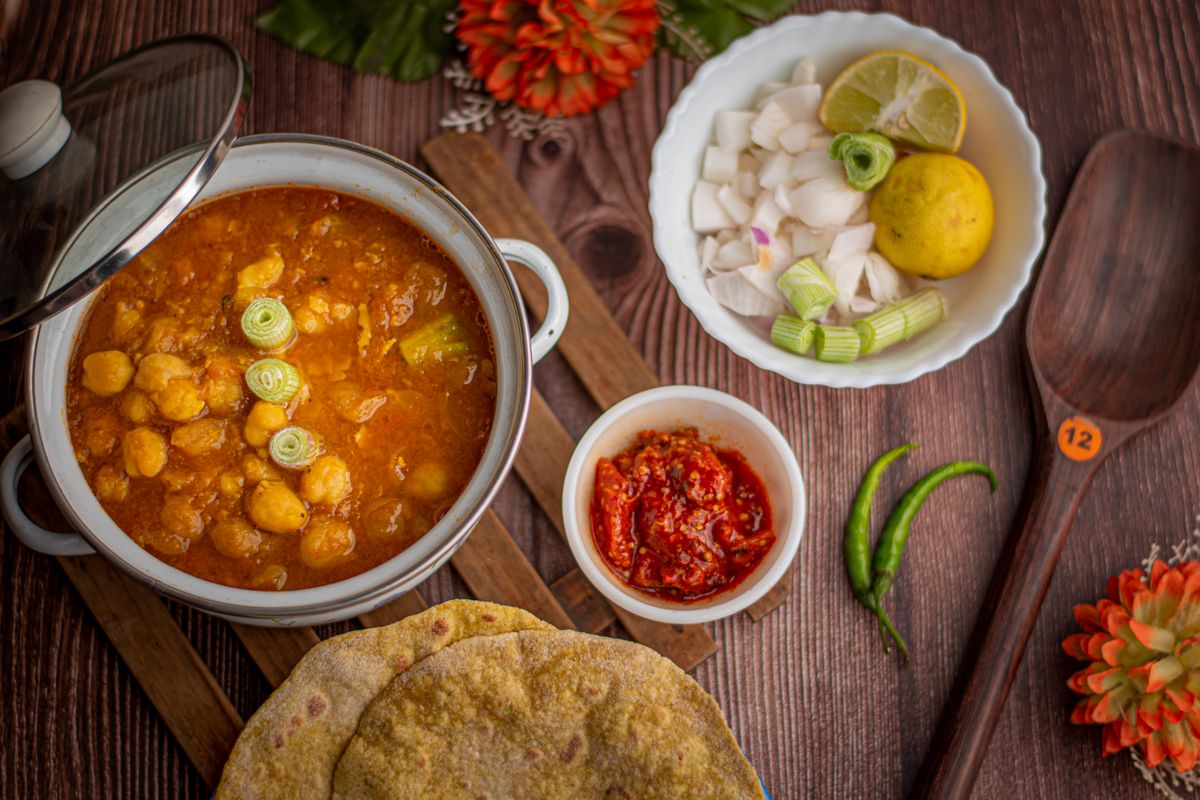
Banana leaf rice is the full meal: rice mounded on a banana leaf, curries poured at the edges — chicken, mutton, fish — vegetables, pickles and crisp papadum on top, eaten with the fingers and finished with rasam, a hot-sour pepper soup you drink from a small steel cup. And nasi kandar, Penang's great curry institution, came from the porters who once carried rice and curries in buckets on a shoulder pole (kandar). Today it is a counter of a dozen curries from which the server floods your rice — banjir, literally "flooded" — mixing fish, chicken, mutton and vegetable gravies into one plate that a Penangite will judge with his whole chest. Get it right and it is the best argument in Malaysia that more curry is more.
Nyonya Cooking: The Kitchen Between Two Worlds
The Peranakan Chinese — descendants of early Chinese settlers in the Straits ports who married into local Malay society — built a kitchen of their own, and the women who ran it, the Nyonyas, were its famously demanding chefs. Nyonya cooking takes Chinese ingredients and technique — pork, soy, the wok — and marries them to Malay spice craft: pounded rempah pastes, belacan, coconut milk, tamarind, laksa leaf. It is labour-intensive, precise, and fiercely regional: Penang Nyonya food leans sour and fiery, Malacca's richer and sweeter.
Its most famous dish is also Malaysia's most argued-over bowl. Laksa comes in two worlds. Curry laksa (often called curry mee in Penang) is a coconut curry broth — rich, spiced, gently hot — over noodles with prawns, cockles, tofu puffs, bean sprouts and a spoon of sambal to stir in. Asam laksa, Penang's own, has no coconut at all: a sour fish broth of mackerel, tamarind, lemongrass and laksa leaf, with thick rice noodles, pineapple, cucumber, onion and mint, finished with a thick spoon of prawn paste that darkens the bowl. One is warm and round, the other sharp and bright; Malaysians will tell you their allegiance within seconds of meeting you, and both are right.
For the sweet tooth, the Nyonya answer is kuih: dozens of small, jewel-bright cakes and jellies made from rice flour, glutinous rice, coconut and palm sugar, coloured with pandan green, butterfly-pea blue and egg-yolk gold. They appear at breakfast, at tea, at every celebration, and in the old Straits towns the best makers still sell out by mid-morning.
The Regional Anchors: Penang, Kuala Lumpur, Malacca
Penang calls itself Malaysia's food capital and, unusually for a civic boast, most Malaysians from elsewhere quietly concede it. The island's hawker culture is deep and old — char kway teow, asam laksa, Hokkien mee, nasi kandar all claim their best versions there — and George Town's streets still run on single-dish stalls run by second- and third-generation cooks. If you have three days to eat in Malaysia, spend them in Penang.
Kuala Lumpur is the sprawl: everything from everywhere, all at once. Kampung Baru keeps a Malay food heartland inside the capital; the mamak and kopitiam chains run around the clock; the hawker centres of the suburbs reproduce every regional specialty an internal migrant ever missed. KL rarely wins the "best version" argument, but nothing is missing from its table.
Malacca is the Nyonya heart — the oldest Straits settlement, where Peranakan cooking was codified and where chicken pongteh, babi assam and the town's laksa and cendol carry centuries of family pride. Eat there slowly, ideally in someone's grandmother's restaurant, and leave room for kuih.
One more season deserves a note: Ramadan. During the fasting month, afternoon Ramadan bazaars spring up in every town — hundreds of stalls selling murtabak, ayam percik (spiced grilled chicken), bubur lambuk (the communal spiced rice porridge mosques distribute free) and sweets by the tray. The food is cooked once, eaten at sundown, and the bazaars are among the most joyful eating scenes in the country, open to everyone who queues respectfully.

Across the Border: Malaysia on the Southern Thai Table
Readers of this blog will taste the family resemblance immediately, because Thailand's Deep South — covered in our Deep South Food tab — is where the two tables overlap. The border between Thailand's Malay-speaking southern provinces and Malaysia is a line on a map that lunch has never respected. The roti-and-mataba culture of the south, the pulled teh tarik frothed between two cups, goat curry, biryani-style khao mok — our Khao Mok Gai post on this blog is a first cousin of Malaysia's nasi briyani — all of it flows both ways, carried by the same Muslim food culture of the peninsula. Malaysian nasi kandar and a Satun curry shop are dialects of one language. Even Phuket feels the pull: its morning roti shops and southern curries owe as much to the peninsula's shared heritage as to Bangkok. Follow the food south from Isan through Bangkok to the Deep South and on into Penang, and you have travelled one long, continuous table with changing accents.
A First-Trip Tasting Order
If you land in Malaysia with a week and a good appetite, eat in this order and the country will explain itself:
- Kopitiam breakfast — kopi-O, kaya toast, half-boiled eggs. The table's constitution.
- Nasi lemak — the national plate; judge the sambal.
- Roti canai with dhal at a mamak stall, late at night if possible.
- Char kway teow in Penang, from a stall with a queue.
- Asam laksa — the sour laksa, for the shock of the new.
- Curry laksa the next day, for the comfort of the familiar.
- Nasi kandar banjir — let them flood the rice.
- Satay at dusk, then rendang at a proper Malay lunch.
- Banana leaf rice, eaten with your fingers, rasam to finish.
- Kuih and cendol for the road — the sweet signature to leave on.
This article anchors our Malaysian Food tab, where the dishes get their own close-ups — starting with nasi lemak, and with more plates from this shared table still to come.
Three kitchens, one table — and in Malaysia, nobody asks you to choose.


Comments
Post a Comment