Khao Mee: Pakse-Style Stir-Fried Noodles
Khao Mee: Pakse-Style Stir-Fried Noodles
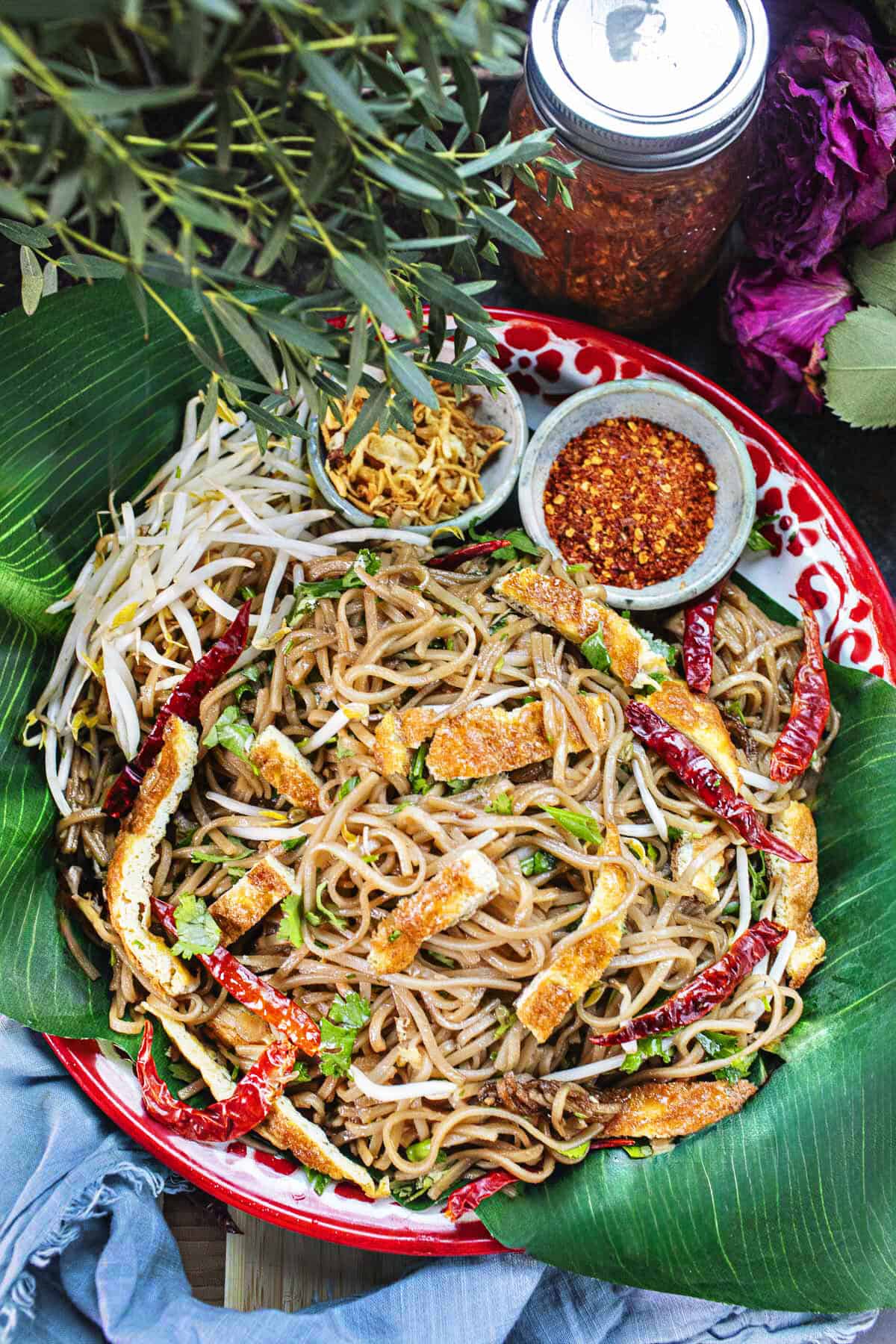
Photo: Simply Suwanee
Walk through a morning market in Pakse, in Champasak Province in southern Laos, and you will find Khao Mee before you find almost anything else: big shallow trays and wide bowls of glossy, amber-brown rice noodles, already cooked, already dressed, waiting to be scooped into a banana leaf or a small bag for the ride home. This is the south's great stir-fried noodle — called khua mee or kua mee in Lao, and sometimes Pad Lao outside the country. Flat rice noodles are tossed in a sauce that starts, unmistakably, with sugar cooked to caramel, then deepened with fish sauce, soy and oyster sauce until it turns sweet, salty and faintly smoky all at once. Thin strips of golden omelette go over the top, bean sprouts and herbs are folded through, and the whole plate is eaten warm or happily at room temperature. If Pad Thai is Thailand's famous noodle, Khao Mee is Laos' beloved answer — simpler, sweeter at its heart, and made for sharing.
Pakse: where two rivers meet
Pakse sits where the Xe Don River joins the Mekong, the natural capital of the south and the gateway to the Bolaven Plateau's coffee country and the Four Thousand Islands further downriver. It is a market town in the best sense — traders, farmers from the plateau, fishermen from the rivers — and its food carries that crossroads feeling: Lao at its core, with Vietnamese and Chinese touches from the communities who settled there, and a southern generosity with herbs, sprouts and fresh things on the side. Khao Mee belongs to that table. Vendors cook it early, in quantity, because it keeps beautifully: the caramel sauce coats every strand and protects it, so a tray made at dawn is still delicious at lunch. That is also why it is the noodle of parties, temple days and family gatherings all over the south — one big batch feeds a crowd, travels well wrapped in banana leaf, and needs no reheating to be good.
Not Pad Thai: the differences that matter
The two dishes look like cousins, and they are — both start with flat rice noodles — but one bite tells them apart. Pad Thai's sauce is built on tamarind, so it leans tangy and sour, and the plate usually arrives with peanuts, chives, tofu and a wedge of lime, cooked to order in a fiercely hot wok. Khao Mee's sauce is built on caramelised sugar, so the first note is a deep, bittersweet sweetness, rounded out by fish sauce and soy rather than tamarind's tang. There are no peanuts in the classic version, the egg comes as a separate thin omelette sliced into ribbons and laid over the top rather than scrambled through, and the noodles are glossy and tender rather than wok-seared. Think of Pad Thai as bright and tangy, and Khao Mee as dark, caramel-sweet and mellow — two great noodles that took the same starting idea in different directions.
What goes on the tray
- The noodles: flat rice sticks, about the width used for pho or Pad Thai, soaked until pliable but still firm. They finish cooking in the sauce, drinking it up until every strand shines
- The caramel: the soul of the dish. Sugar is melted in oil with garlic and shallots until it turns amber and smells faintly smoky — that bittersweet base is what makes Khao Mee taste like Khao Mee and nothing else
- The sauce: fish sauce, light and dark soy and oyster sauce stirred into the caramel with a splash of stock or water. Sweet first, then salty and deep, with the caramel's edge running underneath
- The pork: sliced pork belly or shoulder in the classic street version, simmered briefly in the sauce so it stays tender. Ground pork, chicken or prawns all work at home; a meatless tray with extra omelette is common at festivals too
- The omelette: eggs beaten with a little fish sauce, fried in a thin sheet, rolled and cut into fine strips. They are the garnish and half the pleasure — soft, golden ribbons against the dark noodles
- The finish: a big handful of raw bean sprouts and chopped spring onions or coriander folded through at the end so they stay crisp, plus fried shallots and, for those who want heat, dried chillies or chilli flakes on the side
A noodle made for the morning market
In Pakse, Khao Mee is not really restaurant food. It is market food and home food: cooked in a great wok or pot at the front of a stall, heaped on a tray lined with banana leaf, and sold by the scoop. Students buy a little leaf parcel for breakfast, office workers take a bag for lunch, and anyone hosting a gathering orders a tray the way you might order a cake elsewhere — it simply appears, without fail, when Lao families in the south feed a crowd. It is often served at room temperature with the fresh things piled alongside: more bean sprouts, herbs, sometimes a small dish of jeow or chilli sauce, and sticky rice is never far away on a southern table. The eating is relaxed and communal — no wok theatre, no last-minute frying, just a generous tray in the middle and everyone helping themselves.
The caramel step: the one technique to learn
Everything in Khao Mee is easy except one moment, and that moment is the dish: the caramel. Put sugar and oil in a cold pan with garlic and shallots and heat it slowly, stirring, and watch. The sugar clumps, then melts, then turns pale gold, then amber. Somewhere between amber and dark amber it smells toasty and faintly bitter — that is your moment to pour in the liquid and stop the cooking, because thirty seconds further and it burns. The liquid will hiss and steam dramatically; stand back, stir, and you have a sauce base with a depth no bottled sweet soy can match. Get that step right once and you will never be nervous about it again — and your noodles will have the true Pakse colour, a clear mahogany gloss rather than a flat brown.
Home recipe: Khao Mee, Pakse Style (serves 4 as a main, 6–8 as part of a shared table)
- Soak the noodles: cover 400g dried flat rice noodles with warm water for 30–40 minutes, until pliable but still firm in the centre. Drain well and snip any very long strands in a few places with scissors so they are easy to toss.
- Make the omelette first: beat 3 eggs with 1 teaspoon fish sauce. Heat 1 teaspoon oil in a non-stick pan over medium heat, pour in the eggs and swirl into a thin sheet. Cook until just set, slide out, roll up and slice into thin strips. Set aside.
- Mix the sauce liquid: stir together 250ml chicken stock or water, 3 tablespoons fish sauce, 2 tablespoons oyster sauce, 1 tablespoon light soy sauce, 1 teaspoon dark soy sauce and a pinch of white pepper. Keep it beside the stove — you will need it quickly.
- Make the caramel: in a large wok or wide pot over medium heat, warm 3 tablespoons neutral oil. Add 5 tablespoons sugar, 3 cloves garlic, finely chopped, and 2 shallots, thinly sliced. Stir constantly as the sugar melts and turns from gold to a clear amber, 3–4 minutes. It should smell toasty and bittersweet, not burnt.
- Stop the caramel: standing back, pour in the sauce liquid — it will hiss and steam hard. Stir until the caramel dissolves into the sauce and it comes to a simmer.
- Cook the pork: add 250g pork belly or shoulder, thinly sliced, and simmer for 3–4 minutes until just cooked and tender. (For a meatless tray, skip this and go straight to the noodles.)
- Add the noodles: tip in the drained noodles and toss gently but constantly for 3–5 minutes, until they have absorbed nearly all the sauce, turned a glossy mahogany and are tender with a slight chew. If the pan dries before the noodles soften, add water a splash at a time.
- Fold and finish: turn off the heat and fold through 2 big handfuls of bean sprouts and 4 spring onions cut into short lengths — they should stay crisp. Taste and balance: a little more fish sauce for salt, a pinch more sugar for sweetness if the caramel got very dark.
- Serve the Pakse way: pile the noodles onto a big plate or tray, scatter the omelette strips generously over the top with fried shallots and chopped coriander, and set out extra raw bean sprouts, dried chillies or chilli flakes and lime wedges for anyone who wants them. Warm or at room temperature — both are correct.
The home-cook's rule: watch the caramel, not the clock. Pale gold gives you sweet noodles; deep amber gives you Khao Mee. Pull the pork and noodles together gently, keep the sprouts raw and crisp, and make a big batch — this is a sharing dish, and it is even better an hour later, when the strands have settled into the sauce.
The south in a tray of noodles
Khao Mee will never shout. It has no tamarind tang, no peanut crunch, no wok-fire drama — just caramel, river-town patience and a tray that empties steadily while people talk. But that quiet confidence is exactly what southern Lao cooking does best, from Pakse's markets to the coffee villages up on the Bolaven. If you are travelling through Champasak, buy a banana-leaf parcel at the morning market and eat it by the Xe Don while the day is still cool. And if you are far away, melt sugar to amber in your own kitchen, toss in the noodles, lay the golden egg ribbons over the top, and you will have the taste of Pakse — sweet, savoury, glossy and generous — on your table in under an hour.


Comments
Post a Comment