Khao Jee Pate: The Lao Baguette Sandwich
Khao Jee Pate: The Lao Baguette Sandwich
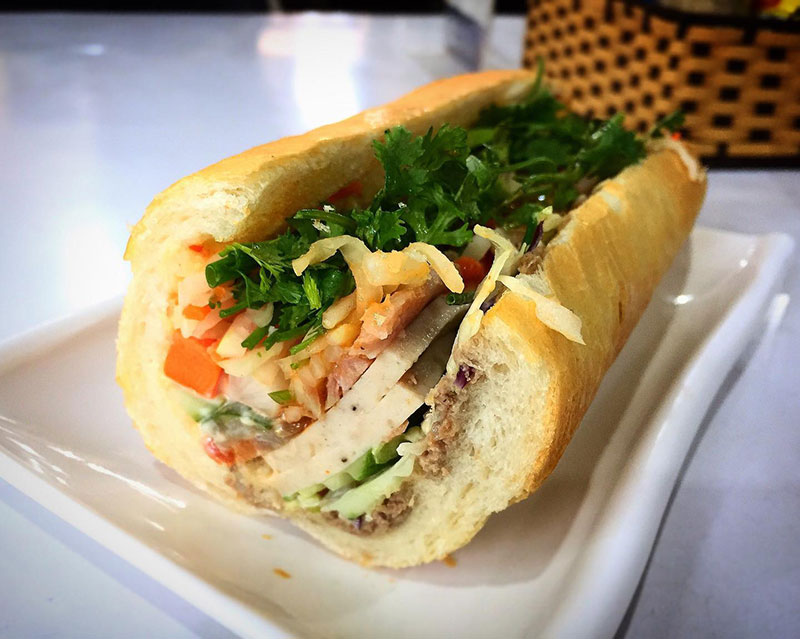
Photo: Van Life Wanderer
Morning in Pakse starts with bread. Before the heat settles over southern Laos, the baguette stalls are already busy — baskets of small, golden loaves, still crackling from the oven, split open and smeared generously with pate. A vendor works fast and without a menu: pate, a slick of mayonnaise, thick slices of white pork sausage, pickled vegetables, cucumber, tomato and a fistful of coriander, then the sandwich is pressed shut, wrapped in paper and handed over still warm. That is khao jee pate, the Lao baguette sandwich — breakfast, lunch and travel food in one crisp loaf, and in the south, around Pakse and Champasak, it is a point of real local pride.
A French loaf that became Lao
The baguette arrived in Laos during the French colonial era, and Laos, characteristically, made it its own. In Lao, khao jee can mean grilled sticky rice in other contexts, but order khao jee pate at a market stall and there is no confusion: you are getting a baguette sandwich built around pate. Bakeries across the country still turn out the small, light, shatteringly crisp loaves every morning — closer to the Vietnamese banh mi loaf than to a heavy Parisian baguette — and the sandwich shops set up right beside them. What goes inside is where Laos takes over: Lao pork sausage, Lao pickles, Lao herbs and, if you want it, a good smear of chilli jeow for heat.
What makes khao jee pate itself
- The loaf: a small, individual baguette — crisp, thin crust that crackles when you squeeze it, soft and airy inside. It should be fresh that morning, and good stalls warm it briefly so the crust crisps again and the pate softens.
- The pate: the name and the soul of the sandwich. A rich pork liver pate, spread thick on both sides — not a polite scraping. Its deep, savoury richness is what every other filling plays against.
- Moo yor: thick slices of the smooth, peppery steamed pork sausage known across Laos and Vietnam — moo yor in Lao, cha lua in Vietnamese. Its clean, bouncy slices are the classic main filling, sometimes joined by sliced ham, roast pork or a fried egg.
- The pickles: shredded carrot and daikon, or pickled papaya, lightly sweet and sour. They cut the pate's richness and give the sandwich its crunch — without them it is heavy; with them it sings.
- The fresh layer: cucumber slices, tomato, lettuce or spring onion, and a generous handful of coriander. In Laos the herbs are never a garnish — they are half the flavour.
- The finish: mayonnaise or butter for richness, a dash of soy or Maggi seasoning, black pepper, and chilli — fresh slices, chilli sauce, or a spoon of jeow — for those who want the Lao heat in the last bite.
Pakse does it proudly
Every Lao town has its khao jee pate stall, but the south talks about Pakse the way other places talk about a noodle town. Pakse, where the Xe Don meets the Mekong, is a trading town with deep Vietnamese and French traces in its food, and its morning sandwich shops feed everyone — market traders, students, bus passengers heading for the Bolaven Plateau or the 4,000 Islands. The style there is generous: a well-filled loaf, pate you can actually taste, pickles piled in, herbs overflowing the seam. Order one, take it to a coffee stall for a strong Lao coffee, and you have the classic southern Lao breakfast — French bread, Lao filling, Vietnamese-influenced sausage and a coffee culture that ties all three together.
A cousin of banh mi, not a copy
Khao jee pate and Vietnam's banh mi are plainly family — same colonial bread, same pate-and-pickle logic, same pork sausage. The Lao sandwich tends to keep its focus narrower and its pate front and centre: moo yor and pate lead, the pickles and herbs support, and a Lao chilli kick is never far away. Think of them as siblings raised in different towns — you will recognise the family face in both, and regulars in Pakse will tell you, firmly and with a smile, which sibling they grew up with.
Home recipe: Khao Jee Pate — Lao Baguette Sandwich (makes 2)
- Get the bread right: use 2 small, fresh baguettes or banh mi-style loaves. Warm them in a 180°C oven for 3–4 minutes until the crust crisps, then split them lengthways without cutting all the way through, so they hinge open.
- Make a quick pickle (or do this an hour ahead): toss 1 carrot and a small piece of daikon, both cut into thin matchsticks, with 2 tablespoons rice vinegar, 1 tablespoon sugar and a pinch of salt. Leave at least 20 minutes, then drain.
- Prep the fillings: slice 150g moo yor (cha lua) or good ham into thick slices; slice half a cucumber and 1 tomato; wash a big handful of coriander and some lettuce leaves; have mayonnaise, soy sauce or Maggi, black pepper and chilli sauce or sliced fresh chillies ready.
- Spread generously: open the warm loaves and spread pork liver pate thickly on both cut sides — about 2 tablespoons per side is the stall spirit, not a thin scrape. Add a slick of mayonnaise on one side.
- Layer it up: lay the moo yor slices along the loaf, then the cucumber and tomato, a generous pile of drained pickles, the lettuce and the coriander pushed in by the handful.
- Season: a few drops of soy or Maggi, a grind of black pepper, and chilli to your taste — fresh slices or a spoon of your favourite jeow or chilli sauce.
- Press and serve: close the sandwich, press it gently but firmly with your palm so it holds together, wrap the base in paper if you like, and eat it straight away while the crust still crackles and the pate is soft from the warm bread. Strong coffee alongside is the Pakse way.
The pate rule: do not be shy. Khao jee pate is named for its pate — if you cannot clearly taste rich, savoury pate in every bite, there is not enough on the loaf. Spread it thick, then let the pickles and herbs do the balancing.
Why it endures
Khao jee pate endures because it is the whole Lao food story in one hand: a French loaf, baked fresh every morning from Vientiane to Pakse, filled the Lao way with pork, pickles, herbs and chilli. It costs little, travels well, feeds you properly and tastes — crisp crust, rich pate, sour pickle, fresh herbs, warm bread — far greater than the sum of its parts. Find a busy morning stall in Pakse, point, smile, and take your sandwich to the river. That is southern Laos at breakfast, and it is very hard to beat.


Comments
Post a Comment