Kaipen: The River Weed of Luang Prabang
Walk through Luang Prabang's morning market in the cool season and you will see them stacked like green roof tiles: large, thin, olive-dark sheets, flecked with sesame seeds. This is kaipen — river weed, harvested from the Mekong and its tributaries, pressed into sheets, sun-dried, then fried for a few seconds until it crisps into something between a cracker, a chip and a sheet of nori. It is Luang Prabang's signature snack, and for most visitors the first bite comes with the same thought: why is this not everywhere?
From the River to the Sheet
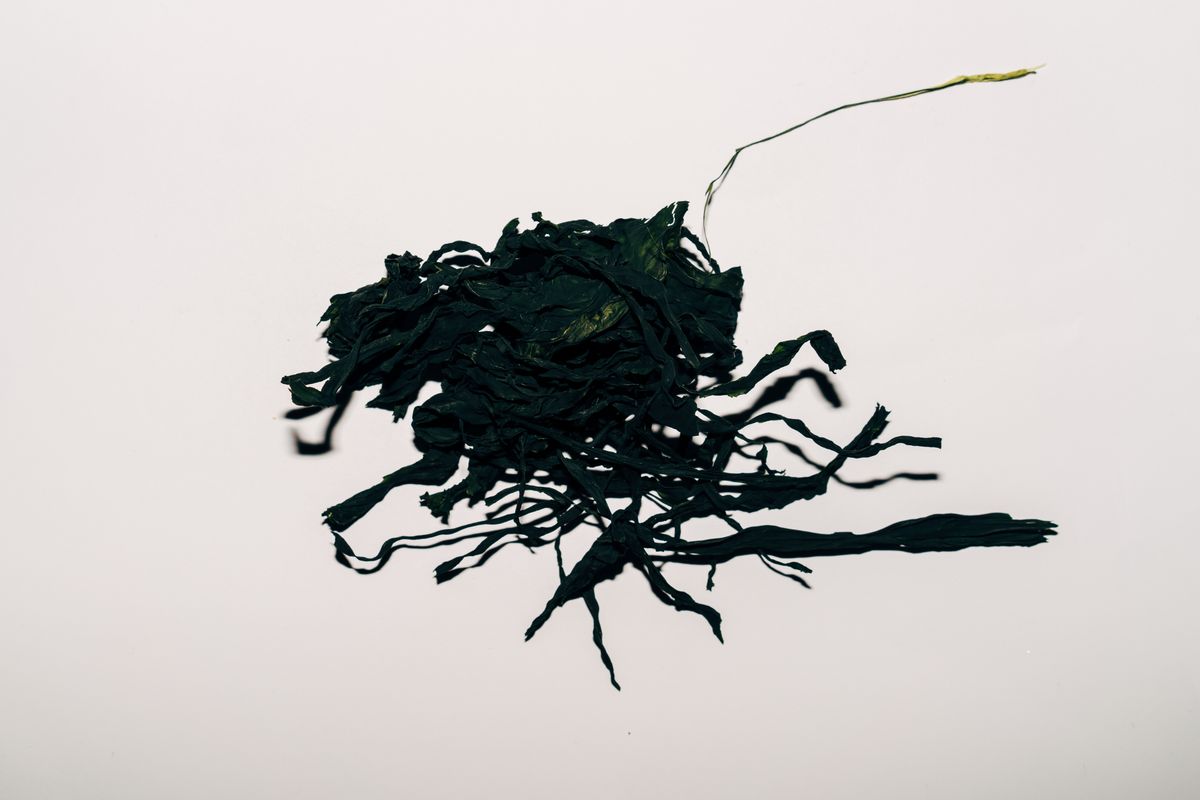
The weed — a freshwater green algae — grows on rocks in clean, fast water during the cool, dry months, roughly November to April, when the Mekong runs low and clear. Harvesters, often women from riverside villages, wade out and gather it by hand, then wash it again and again; river weed demands patience before it demands anything else. The cleaned strands are spread on woven bamboo trays or bamboo frames, pressed flat into sheets, and decorated while still wet: sesame seeds pressed in, sometimes thin slices of garlic, tomato, or galangal laid on top like a pattern.
A day or two of northern sun does the rest. What comes off the tray is a crisp, storable sheet that keeps for months — river food turned into pantry food, in a region where the harvest season is short and the appetite for it is not.

How It Is Eaten
Raw from the packet, a dried sheet is leathery and mild. The transformation takes seconds: slip it into hot oil and it puffs and crisps almost at once — too long and it scorches, which every Lao cook has done once and never again. Fried kaipen is eaten as a snack with beer, torn into pieces at the table with grilled dishes, and above all with jeow bong, the sweet-hot Luang Prabang chilli dip. The pairing is fixed the way some countries fix cheese and wine: crisp green sheet, dark red dip, sticky rice somewhere nearby.
Street vendors sell small fried pieces in bags; restaurants lay a whole bronzed sheet across a platter like a sail. Children eat it the way children elsewhere eat crisps, which is to say constantly, and visitors who buy one packet as a curiosity usually buy three more as luggage.
A Taste of the River Itself
Kaipen's flavour is delicate: green, faintly mineral, with the sesame and garlic riding on top and the clean taste of moving water underneath. That delicacy is also its warning system. The weed only grows well in clean water, and Luang Prabang people read a good kaipen season as a report on the river's health. Upstream dams and changing water levels have made harvests less predictable than they were, and sheets that were once a cheap everyday food now command a real price in the market — worth it, locals will tell you, and a reason to buy from riverside villages when you can.
You will find imitations and Mekong-weed sheets elsewhere in the region, but kaipen belongs to this stretch of river and this old city in the way the blog keeps meeting all over the north: one ingredient, one place, and a method too simple to improve.

Buying and Frying It Abroad
Dried kaipen travels well and turns up in Lao shops overseas in the cool months, usually in flat packets of several sheets. Buy sheets that smell clean and faintly sweet, not musty, and store them dry and dark. To serve, heat a shallow pan of oil until properly hot, slide a sheet in flat, count a few seconds until it crisps and brightens, and lift it straight onto paper. Salt is unnecessary; the dip does the seasoning.
No jeow bong in the house? A sweet chilli sauce gets you politely close, and this blog's jeow article will fix the real thing. Either way, eat it the day you fry it, standing in the kitchen if necessary — kaipen, like the river it came from, does not like to wait.


Comments
Post a Comment