Jeow Mak Len: Roasted Tomato and Chili Dip
Jeow Mak Len: Roasted Tomato and Chili Dip
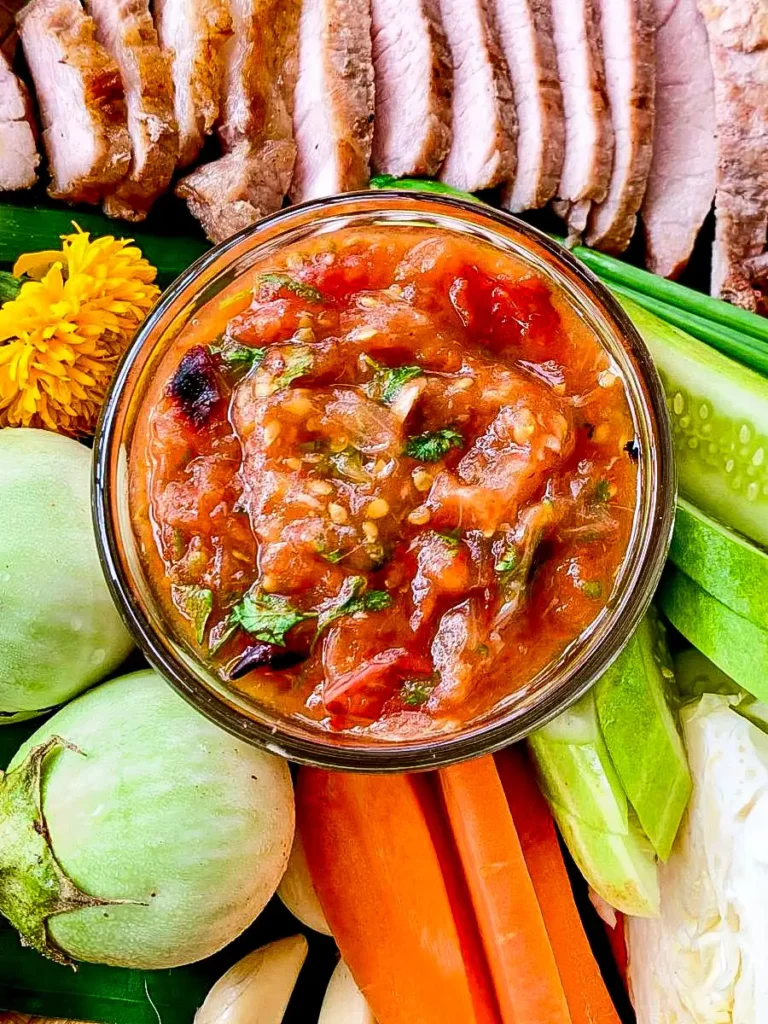
Photo: Hungry in Thailand
Every Lao meal needs a jeow. That is the first rule of the table, from Luang Prabang in the north to Pakse in the south: a small bowl of something pounded, fiery and deeply savoury, set in the middle for everyone to reach. Jeow Mak Len may be the friendliest of them all. Mak len means tomato, and this is a roasted tomato and chili dip — smoky, juicy, garlicky and bright — pounded in a mortar until it is part sauce, part salsa, and entirely irresistible with a ball of sticky rice pinched between your fingers.
In Champasak Province, around Pakse, Don Det and the coffee villages of the Bolaven Plateau, you will meet it at breakfast, lunch and dinner without anyone making a fuss about it. It arrives with grilled river fish, with slices of pork, with a plate of raw vegetables, or with nothing more than sticky rice and a boiled egg. It does not need an occasion. It is the dip that makes plain food sing.
First, the fire
The whole character of Jeow Mak Len comes from charring. Tomatoes, shallots, garlic and fresh chillies go straight over charcoal — or under a fierce grill, or into a dry cast-iron pan — in their skins, and stay there until the skins blister, blacken in spots and slump. That short, smoky cooking does three things at once. It sweetens the tomatoes and shallots, it mellows the garlic into something soft and almost nutty, and it gives the finished dip a gentle smoke that no raw salsa can match.
Home cooks in southern Laos thread the vegetables onto bamboo skewers to turn them easily over the coals. The chillies finish first, then the garlic; the tomatoes take longest and should collapse when pressed. Nothing should burn through — blackened patches are welcome, ash is not. Once everything cools just enough to handle, the papery skins slip off the shallots and garlic, and the pounding begins.
Pounded, not blended
A Lao kitchen reaches for the mortar first. Chillies, garlic and shallots are pounded with a pinch of salt to a rough paste, then the roasted tomatoes are added and pounded more gently, so they break down into a chunky, spoonable sauce rather than a puree. Fish sauce seasons it, a little padaek — Laos' fermented fish sauce — deepens it if you like, and chopped coriander and spring onion go in at the end for freshness.
A food processor on pulse can do the job, and there is no shame in it, but the mortar gives you control: a few pieces of tomato with body left in them, flecks of char, and juices that stay bright instead of foaming. The finished jeow should be loose enough to dip into, thick enough to cling to sticky rice, and balanced — smoky first, then salty, sour from the tomato, and warm with chilli that builds rather than attacks.
What goes on the plate with it
Jeow Mak Len is a team player. In the south it is served the way you see in the photograph above: a bowl in the centre, and around it whatever the meal offers. The classic partners are:
- Sticky rice: the essential one — pinch off a small ball, flatten it slightly, and scoop
- Grilled fish and grilled pork: plainly cooked, because the dip does the seasoning
- Raw vegetables: cucumber, Thai eggplant, cabbage, long beans and carrot for cool crunch
- Steamed vegetables: especially bamboo shoots, pumpkin and greens in bamboo season
- Boiled or fried eggs: a humble pairing that makes the dip a meal on its own
- Pork rinds and Lao sausage: for market lunches and celebrations, rich against the dip's brightness
That balance — fiery dip, plain rice, cool vegetables, simply grilled protein — is the southern Lao table in miniature. Nothing is heavily sauced or complicated, because the jeow carries the flavour for everything around it.
A family of jeow
Jeow Mak Len belongs to a big, proud family. Jeow bong, the sweet-hot chili paste of Luang Prabang, keeps for weeks. Jeow mak keua is made the same roasted way with eggplant instead of tomato, silkier and smokier still. Jeow som is bright and sour, pounded raw with lime. Every cook in Pakse has a version of the tomato one — a little more padaek here, an extra handful of chillies there, sometimes a spoonful of sugar when the tomatoes are sharp — and every cook will tell you, cheerfully, that theirs is the correct one. They are all right. The recipe below is a good southern starting point; taste it and make it yours.
Home recipe: Jeow Mak Len (makes about 1 1/2 cups)
Ingredients:
- 4 medium ripe tomatoes (about 400g), or a generous cup of cherry tomatoes
- 4 small shallots, unpeeled
- 6 cloves garlic, unpeeled
- 4–8 fresh red or green bird's eye chillies, to your heat
- 1/2 teaspoon salt
- 1 1/2 tablespoons fish sauce, plus more to taste
- 1 teaspoon padaek (Lao fermented fish sauce), optional but recommended
- 2 tablespoons chopped coriander leaves and stems
- 1 spring onion, finely sliced
- 1/2 teaspoon sugar, only if your tomatoes are very tart
Method:
- Char everything. Thread the tomatoes, shallots, garlic and chillies onto soaked bamboo skewers, or lay them directly on a grill rack over charcoal, under a hot broiler, or in a dry heavy pan over high heat. Turn often for 8–12 minutes, until the skins are blistered and blackened in spots and the tomatoes slump. Take the chillies and garlic off first if they colour quickly.
- Peel. Let everything cool for a few minutes. Slip the skins off the shallots and garlic and squeeze the soft flesh out. Leave the tomato skins on — the charred flecks are part of the flavour — unless large burnt pieces come away easily.
- Pound the aromatics. In a mortar, pound the chillies, garlic, shallots and salt to a rough paste, about a minute.
- Add the tomatoes. Add the roasted tomatoes a few at a time and pound gently, turning the mortar, until you have a chunky, juicy sauce. Do not pound it smooth.
- Season. Stir in the fish sauce and padaek, then taste. You want smoke, salt and tomato brightness in balance, with heat behind. Add the sugar only if it tastes sharply acidic, and more fish sauce if it tastes flat.
- Finish fresh. Fold in the coriander and spring onion. Rest the jeow for 10 minutes so the flavours settle, then taste once more and adjust.
- Serve. Spoon into a small bowl and set it in the middle of the table with sticky rice, raw and steamed vegetables, and grilled fish or pork. Leftovers keep, covered, in the fridge for 3–4 days and are wonderful with a fried egg and rice the next morning.
The home-cook's rule: char, don't burn, and season at the end. Tomatoes vary — sweet in the cool season, sharper in the rains — so the fish sauce goes in by taste, never just by measure.
The little bowl that holds the meal together
Jeow Mak Len will never be the biggest dish on the table, and that is exactly its job. In Pakse homes and market stalls it is the small bowl everyone reaches for, the one that turns rice into a meal and grilled fish into a feast. Roast a handful of tomatoes over fire this week, pound them with garlic and chilli, and you will understand southern Laos a little better — one smoky, fiery scoop of sticky rice at a time.


Comments
Post a Comment