Hat Yai Fried Chicken: Shallots on Top, Always
Hat Yai Fried Chicken: Shallots on Top, Always
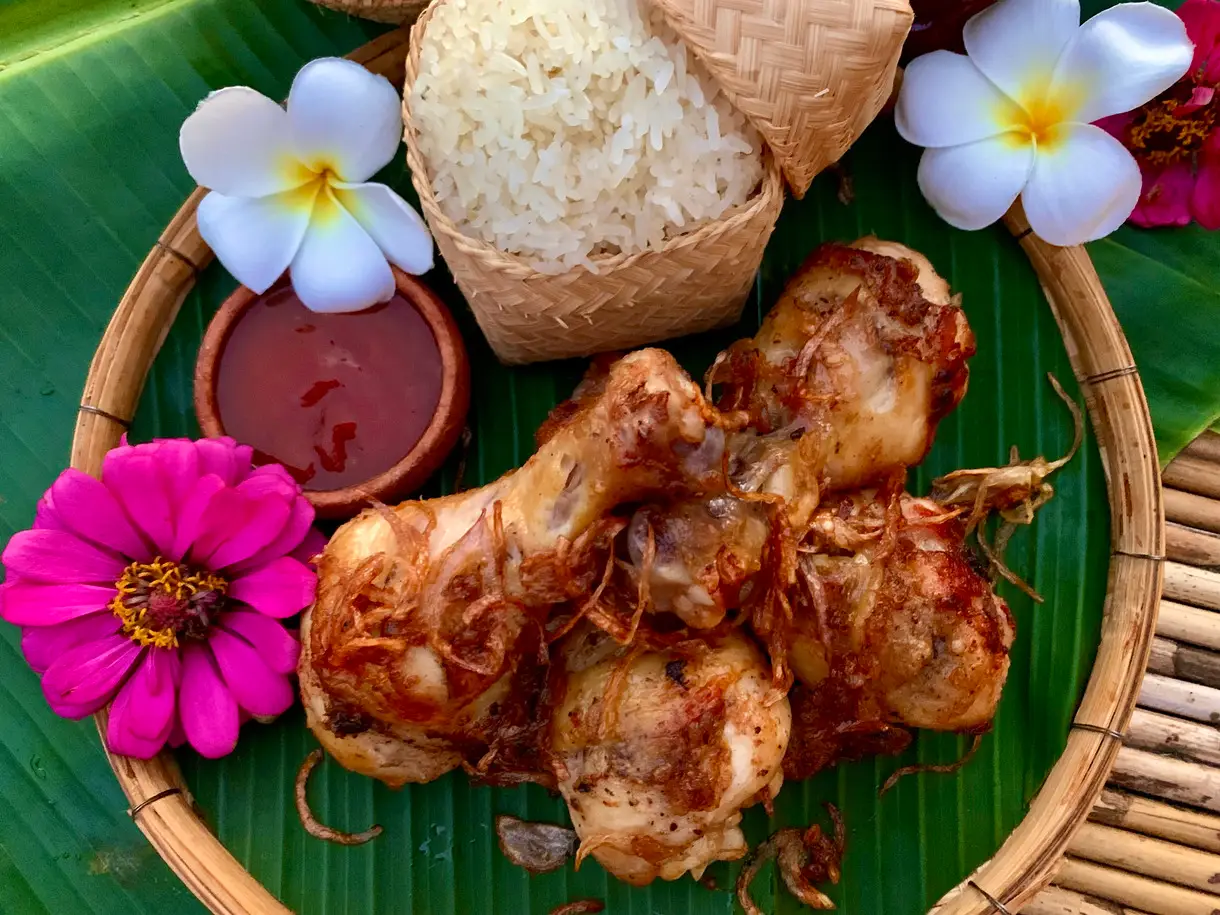
Photo: Hungry in Thailand
Every fried chicken has a signature, and Hat Yai's is not the crust — it is what lands on top of it. Gai tod Hat Yai, the fried chicken of Hat Yai in Songkhla province, comes out of the wok with a thin, shattering, deeply seasoned skin, and then the vendor does the thing that makes it Hat Yai: a generous shower of golden, crispy fried shallots over the chicken and over the sticky rice beside it. The shallots are sweet, savoury and impossibly crisp, and they perfume everything they touch. Take them away and you have very good fried chicken. With them, you have one of the most loved plates in southern Thailand — a dish so popular that stalls selling it have spread from Hat Yai's markets and train station to street corners all over the country.
A railway city's famous chicken
Hat Yai is the great transport and trading hub of Thailand's Deep South — a busy, multicultural city where Thai Buddhist, Thai Muslim and Chinese communities have cooked side by side for generations. Its fried chicken grew up in that mix. The marinade carries the warm spice habits of the South's Muslim kitchens — cumin, coriander seed, turmeric and white pepper alongside garlic and fish sauce — and the fried shallots on top are the same garnish that crowns the region's biryanis, including the khao mok gai from this same corner of Thailand. Vendors set up where the people are: outside the station, at morning markets, near schools and mosques, the chicken frying in great black woks, the shallots crackling in a separate pan, sticky rice steaming in woven baskets. A paper parcel of chicken, rice and shallots is Hat Yai's great portable meal — breakfast, lunch or train food, eaten with the fingers.
The marinade does the heavy lifting
Unlike battered fried chicken built around a thick coating, Hat Yai chicken is seasoned all the way through before it ever meets the oil. Pieces of bone-in, skin-on chicken — thighs and drumsticks are the classics — are rubbed with a pounded paste and left for hours, ideally overnight:
- The paste: garlic, coriander roots or stems, white peppercorns and often coriander seed and cumin, pounded together in a mortar
- The seasoning: fish sauce and soy sauce for salt and depth, a little sugar to balance and to help the skin colour, and turmeric for that warm golden tone
- The scoring trick: vendors slash the thickest pieces to the bone, so the marinade reaches deep and the chicken fries evenly without staying raw at the centre
By frying time the chicken is already fully flavoured — the crust only has to add crispness.
A thin crust, on purpose
The coating is the opposite of a thick, craggy batter. Just before frying, the marinated chicken gets the lightest dusting — traditionally rice flour, sometimes with a little tempura flour or a spoonful of the marinade worked into a thin slurry — so the skin fries up thin, crisp and glassy rather than bready. The pieces go into properly hot oil and fry until deep golden and cooked through at the bone, then drain for a moment so the crust stays crisp. The result eats completely differently from American fried chicken: lighter, snappier, with the seasoned meat right there under a skin that shatters. It is chicken built to be eaten with sticky rice and your hands, not with a knife and fork.
The shallots are not optional
Ask anyone from Hat Yai and they will tell you plainly: no fried shallots, no Hat Yai chicken. Making them well is a small craft of its own. Asian shallots are sliced evenly and thinly — even slices fry at the same rate — then salted and rested so the salt draws out moisture, patted dry, and fried low and slow, stirring constantly. The colour is the trap: shallots go from pale gold to burnt in seconds, and they keep darkening after they leave the oil, so good cooks pull them when they are just golden and let them finish on the draining tray, where they crisp as they cool. Done right they are sweet, delicate and shatteringly crisp, and the frying oil they leave behind — now perfumed with shallot — is a prize in itself. A Hat Yai vendor scatters them with a free hand: over the chicken, over the rice, and a few extra in the parcel for the road.
How it is served
The classic plate is simple: fried chicken pieces, a mound or basket of hot sticky rice, a little dish of sweet chilli sauce — nam jim gai — and that blanket of fried shallots over everything. You pinch off a ball of sticky rice, tear off a piece of chicken, add shallots, dip, eat. Some stalls add cucumber slices or a small bag of pickled vegetables to cut the richness. Because Hat Yai chicken travels and reheats gracefully, it is also the South's picnic and journey food — and in Bangkok and beyond, whole shops now exist that sell nothing else, flying the Hat Yai name like a flag.
Home recipe: Hat Yai Fried Chicken (serves 4, with sticky rice)
For the marinade:
- 1kg bone-in, skin-on chicken thighs and drumsticks, scored to the bone in the thickest parts
- 6 garlic cloves
- 4 coriander roots or 8 coriander stems, roughly chopped
- 1 teaspoon white peppercorns
- 1 teaspoon coriander seed (optional but traditional in the South)
- 1/2 teaspoon ground cumin
- 1/2 teaspoon ground turmeric
- 2 tablespoons fish sauce
- 1 tablespoon light soy sauce
- 1 tablespoon sugar
- 1/2 teaspoon salt
For frying and serving:
- 4–5 tablespoons rice flour
- Neutral oil, for deep-frying
- 150g Asian shallots, peeled and sliced thinly and evenly, plus a pinch of salt — for the fried shallots (or good shop-bought fried shallots, refreshed 5 minutes in a 150°C / 300°F oven)
- Sticky rice, soaked overnight and steamed, to serve
- Sweet chilli sauce (nam jim gai), to serve
- Make the marinade: pound the garlic, coriander roots, white peppercorns and coriander seed to a paste in a mortar (or blitz in a small food processor). Stir in the cumin, turmeric, fish sauce, soy sauce, sugar and salt. Rub all over the chicken, working it into the scores, cover and marinate at least 4 hours, ideally overnight in the fridge.
- Make the fried shallots first: toss the sliced shallots with a pinch of salt and rest 10 minutes, then spread on paper towel and press dry. Add them to a wok or pot with enough oil to cover, set over low heat, and fry gently, stirring often, for 6–10 minutes until evenly light golden and the bubbling calms down. Lift out at once with a slotted spoon onto paper towel — they will darken a shade and crisp as they cool. Keep the shallot oil for frying the chicken.
- Coat the chicken: bring the chicken to room temperature for 20 minutes. Toss the pieces in the rice flour until lightly and evenly dusted; shake off the excess. There should be no thick batter — just a thin, dry coat.
- Fry: top up the shallot oil so it is about 5cm deep and heat to 170–175°C (340–350°F). Fry the chicken in batches, without crowding, for 10–14 minutes depending on size, turning once or twice, until deep golden and cooked through at the bone (juices run clear, or 75°C / 165°F at the thickest point). Drain on a rack, not paper, so the crust stays crisp. Rest 5 minutes.
- Serve the Hat Yai way: pile the chicken onto a plate or banana leaf, shower generously with the fried shallots — over the chicken and over the sticky rice — and serve with sweet chilli sauce and extra shallots on the side. Eat with your fingers.
The shallot rule: when you think you have fried enough shallots, fry half as many again. They disappear from the plate faster than the chicken does, and a Hat Yai plate that runs out of shallots is only half dressed.
Why it lasts
Hat Yai fried chicken endures because every part of it earns its place: a marinade that seasons to the bone, a crust that stays out of the way, and a garnish that is not a garnish at all but half the dish. It is the taste of a southern railway city — Muslim spice, Thai seasoning, market-stall practicality — packed into a paper parcel with sticky rice. Make it once, with the shallots done properly and scattered without restraint, and you will understand why the whole country knows this chicken by the name of its city. Shallots on top, always.


Comments
Post a Comment