Cơm Tấm: Saigon's Broken Rice and the Perfect Pork Chop
Every great food city has a dish that began as poverty and ended as identity. Saigon's is cơm tấm: a plate of rice cooked from broken grains, topped with a charcoal-grilled pork chop, and eaten at all hours by everyone from motorbike drivers to office directors. The broken rice was once the fraction no exporter wanted. Saigon turned it into the plate the city runs on.
The Rice That Was Thrown Away
When rice is milled, a share of the grains fracture. Those fragments — tấm — were historically set aside as the cheap portion, sold to poor families, farmers and workers because whole grains commanded the real price. Nothing about the flavour is inferior; if anything, broken rice cooks up softer and more absorbent, drinking in sauce and pork juices instead of politely sitting under them.
Cooks in the Mekong delta built breakfasts around it, and Saigon — the delta's great market city — made it an institution. The grains are steamed until each fragment is separate and tender, then served in a shallow mound with mỡ hành, a spoonful of scallion oil that glistens over the top and perfumes the whole plate. That green sheen is the dish's flag: you can spot a cơm tấm plate across a crowded stall.
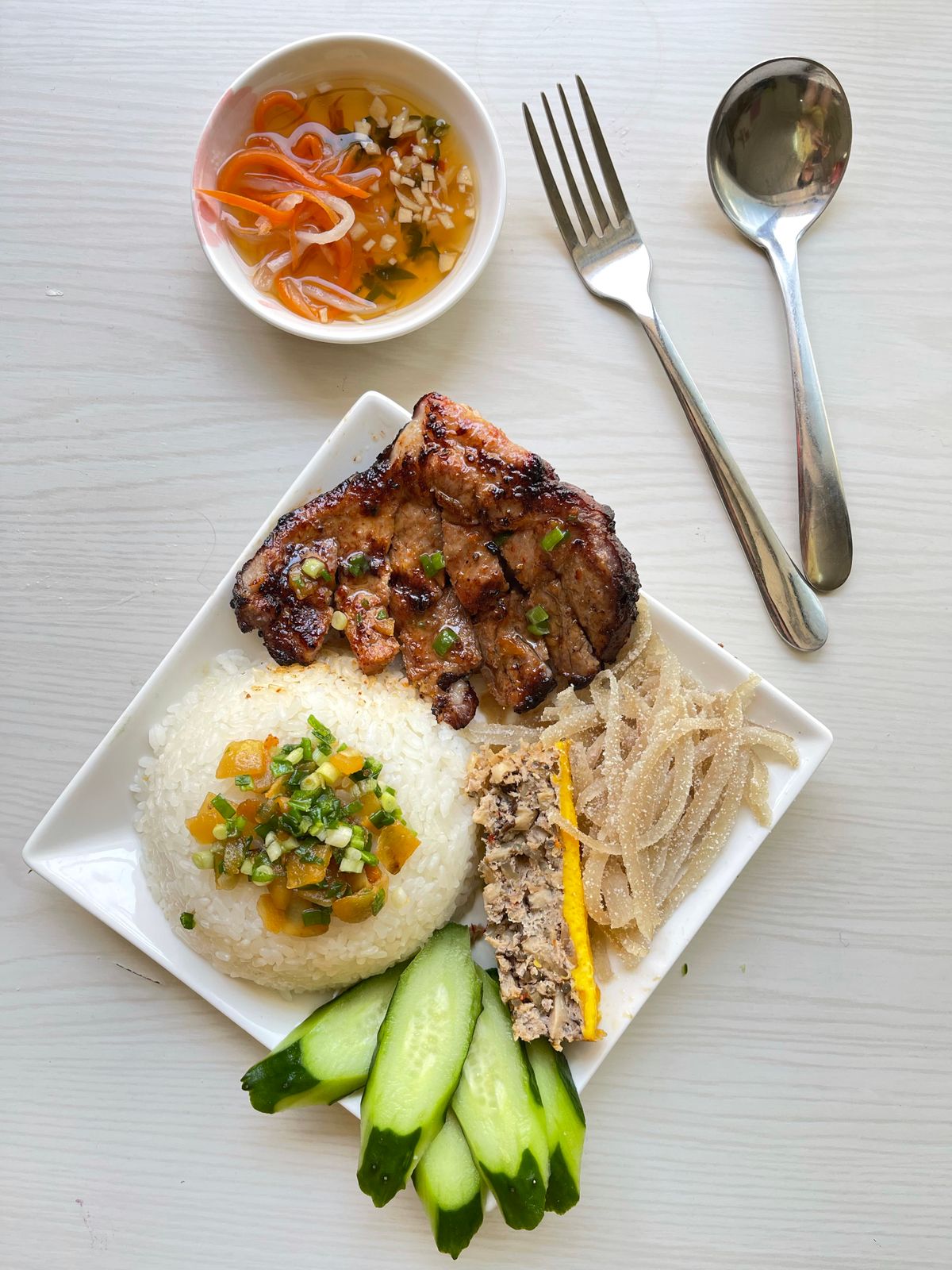
Sườn, Bì, Chả: The Holy Trinity
Order the full works — cơm tấm sườn bì chả — and three toppings arrive like a committee. The sườn is the anchor: a pork chop marinated in lemongrass, fish sauce, garlic and a little sugar, grilled over charcoal until the edges caramelise and char in spots. It should smell of smoke before it reaches the table.
The bì is the texture nobody expects: pork skin and shredded pork tossed with toasted rice powder, fine as confetti, faintly nutty, chewy and soft at once. The chả is a steamed loaf of egg, minced pork, glass noodles and wood-ear mushroom, sliced into slabs with a golden top. Around the trinity orbit the supporting cast: pickled carrot and radish, cucumber, tomato, sometimes a fried egg, and a small bowl of nước chấm — sweet fish sauce — that gets poured over everything, generously, twice.
The Sidewalk Grill
Cơm tấm is inseparable from its theatre: the sidewalk charcoal grill, a cook fanning the coals with one hand and turning chops with the other, smoke rolling across the morning traffic. The great stalls start before dawn for the labourers' breakfast and many run two shifts, reopening for the late-night crowd. In Saigon slang the dish earned the nickname of the people's plate — no ceremony, no reservations, eaten with a fork in one hand and a spoon in the other, never chopsticks alone.
Prices stay democratic even in the centre, which is part of the point. A full trinity plate at a beloved stall costs little more than a plain one elsewhere, and the hierarchy of stalls is decided by the marinade, the char and the quality of the bì — in that order, according to anyone who will argue about it, which is everyone.

How to Eat It
Break the chop with the spoon's edge, drag rice through the scallion oil and sauce, and build each spoonful with a little of everything — meat, bì, pickle, rice. The pickles are not decoration; their acid resets your mouth between bites of char and fat. If the stall offers a small bowl of clear soup alongside, that is the traditional chaser, sipped between mouthfuls.
Broken grains, poor people's rice — Saigon kept the facts and reversed the verdict. Come hungry at 6 a.m., sit where the smoke is, and order the trinity. Some dishes feed a city. This one introduces it.

-- in Luang Prabang
Checking the sky over Luang Prabang…
Full Luang Prabang forecast →Patong Harbor View condos — pools, mountain-view balconies, walk to the beach. Skip the platform fees and deal with the owner.
See the Condos →Anna, the AI receptionist, answers your calls, books appointments and follows up with your customers — for $395/month.
Meet Anna →Or call (386) 334-2561 and ask for Anna — she answers 24/7.


Comments
Post a Comment