Banh Xeo: The Sizzling Turmeric Crepe
Banh Xeo: The Sizzling Turmeric Crepe
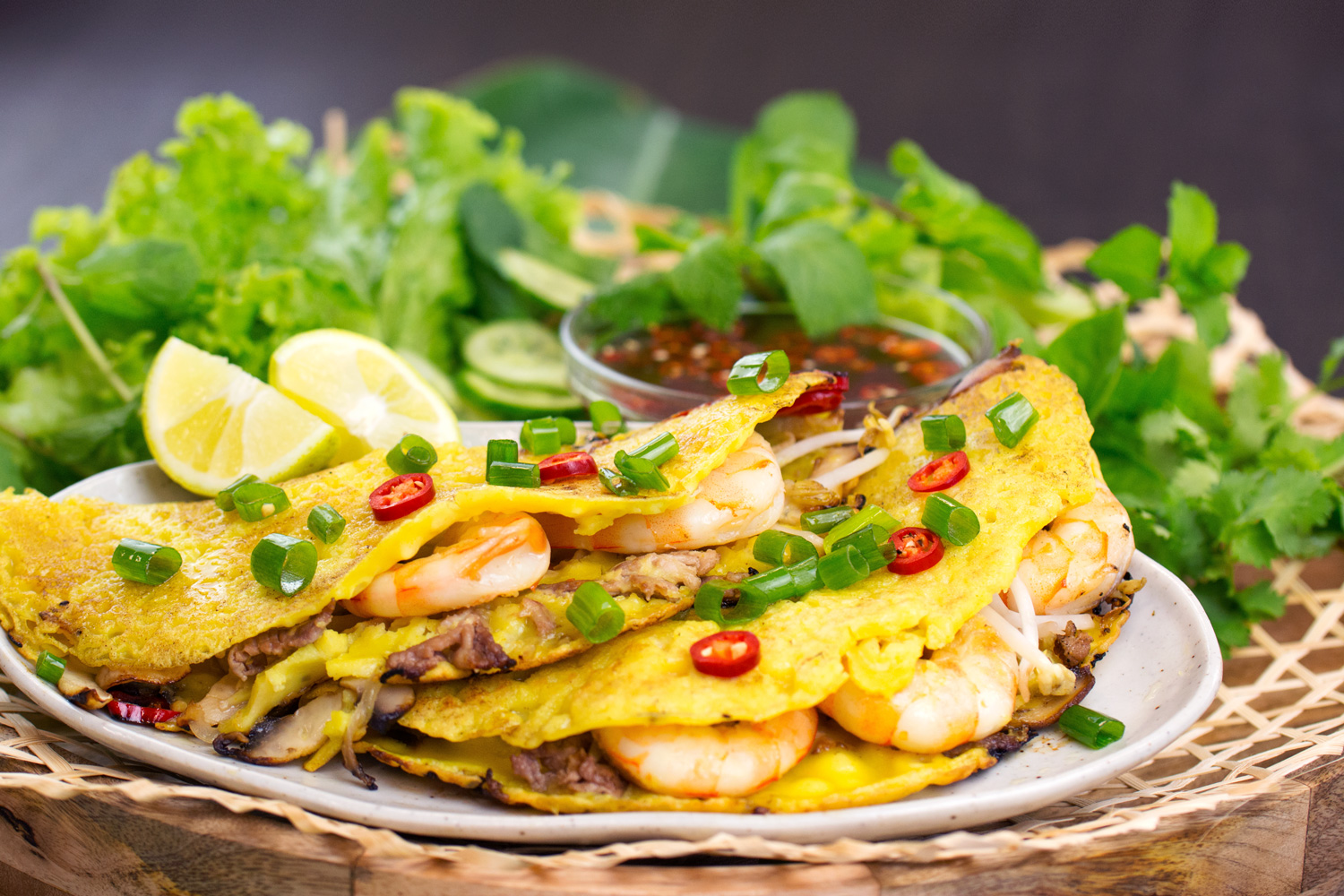
Photo: Asian Inspirations
You hear banh xeo before you see it. The batter hits a smoking-hot cast-iron pan and erupts in a loud, joyful sizzle — xeo, in Vietnamese, is that very sound, and it gives the dish its name. Seconds later a lacy, golden crepe comes out, crisp at the edges, folded in half over prawns, pork and a tumble of bean sprouts, its colour a deep, sunny yellow from turmeric. It is cut into pieces with scissors, wrapped in lettuce and herbs, dunked in nuoc cham, and eaten while it is still crackling. Banh xeo is Vietnam's sizzling turmeric crepe, and it is one of the most fun dishes in the whole country to eat.
South, centre — and two different crepes
Banh xeo belongs first to the South and Centre of Vietnam, and the two regions make it differently. The southern crepe, the Saigon style, is large — cooked in a wide pan, thin and shatteringly crisp, generously filled, and often enriched with coconut milk in the batter and sometimes an egg yolk for colour and richness. The central crepe, from places like Quang Ngai and Binh Dinh, is smaller, thicker and chewier, cooked in little clay or cast-iron moulds over charcoal, with less filling and a sauce that can be richer and peanutty. Both are wonderful; they are simply different answers to the same happy idea. The version most of the world knows — and the one in the recipe below — is the big, crisp southern crepe.
The batter is the whole craft
A great banh xeo lives or dies on its batter and its pan. The batter is simple — rice flour, turmeric, salt, water and, in the South, coconut milk — but it has to be thin, well rested and poured into a pan that is properly, almost alarmingly, hot:
- Rice flour: the base, giving the crepe its crisp, delicate shell; some cooks add a spoonful of cornstarch or leftover cooked rice blended in for extra crunch
- Turmeric: for that unmistakable golden colour and a gentle earthiness — no turmeric, no banh xeo
- Coconut milk: the southern touch, adding richness and helping the edges lace and crisp
- The swirl: a ladle of batter is poured into the hot oiled pan and swirled fast, so it coats the base in the thinnest possible layer and climbs the sides into a frilly, lacy rim
- The cover: a lid goes on for a minute so the filling steams, then comes off so the crepe can fry, undisturbed, back to crisp
The cook works fast and by ear. When the sizzle settles and the edges pull away, crisp and golden, the crepe is folded and slid out — and the next ladle of batter is already going in.
What goes inside
The classic southern filling is a small, perfect cast: whole small prawns, thin slices of pork belly, and a generous handful of bean sprouts, with mung beans and sliced onion or chives in many versions. The prawns turn pink through the batter's windows, the pork renders a little of its fat into the pan, and the sprouts stay just crunchy under the fold. Nothing is heavy or piled high — the filling seasons the crepe rather than stuffing it, so the crisp shell stays the star. Vegetarian versions swap in mushrooms and tofu, and in the Mekong Delta you will find crepes filled with whatever the market brought that morning.
Cut, wrap, dip, eat
Banh xeo is a hands-on dish, eaten the moment it leaves the pan. The crepe is cut into bite-size pieces — kitchen scissors are the traditional tool — and then the wrapping begins. Take a piece, lay it on a lettuce leaf or a sheet of mustard greens, add mint, perilla and other fresh herbs, roll it up into a tight little parcel, and dip the whole thing generously in nuoc cham, Vietnam's sweet-sour fish-sauce dressing with garlic and chilli. The contrast is the pleasure: hot, crisp and rich from the crepe, cool and fresh from the leaves, bright and sharp from the dip. One crepe is never quite enough, and a good banh xeo stall knows it — they keep coming until you wave them off.
Home recipe: Banh Xeo (makes 4 large crepes, serves 4 as a light meal)
For the batter:
- 200g rice flour
- 1 tablespoon cornstarch (optional, for extra crispness)
- 1 teaspoon ground turmeric
- 1/2 teaspoon salt
- 200ml coconut milk
- 250ml cold water, plus a little more if needed
- 2 spring onions, finely sliced (green parts)
For the filling and serving:
- 12 small raw prawns, peeled (tails on if you like)
- 200g pork belly or shoulder, very thinly sliced
- 200g bean sprouts, washed
- 1 small onion, thinly sliced
- Neutral oil, for frying
- Lettuce or mustard-green leaves, mint, perilla and coriander, washed and dried, to wrap
- Nuoc cham, to serve: 3 tablespoons fish sauce, 3 tablespoons sugar, 4 tablespoons warm water, 2 tablespoons lime juice, 1 chopped garlic clove and sliced fresh chilli, stirred until the sugar dissolves
- Make the batter: whisk the rice flour, cornstarch, turmeric and salt together, then whisk in the coconut milk and water to a thin, pourable batter — about the thickness of single cream. Stir in the spring onions and rest at least 30 minutes (an hour is better). Stir again before using; add a splash of water if it has thickened.
- Prepare everything before you start: pat the prawns and pork dry and season lightly with salt and pepper; have the bean sprouts, onion, oil and a lid within reach of the stove. Banh xeo waits for no one once the pan is hot.
- Heat the pan: set a large, heavy, well-seasoned cast-iron pan or wok over high heat until it is smoking hot. Add 2 teaspoons of oil and swirl to coat.
- Cook the filling briefly: add 3 prawns and a quarter of the pork and onion, and stir-fry for about 30 seconds, just until the prawns start to turn pink. Spread them out evenly across the pan.
- Pour and sizzle: give the batter a stir, pour in a ladleful (about 100ml) and immediately swirl the pan so the batter coats the base thinly and climbs the sides. Scatter a quarter of the bean sprouts over one half. Cover with the lid for 1 minute to steam the top.
- Crisp it: remove the lid, drizzle a teaspoon of oil around the edge, and fry for another 2–3 minutes without touching it, until the base is deep golden, the edges are lacy and crisp and pulling away from the pan, and the sprouts are just wilted.
- Fold and serve: fold the crepe in half over the sprouts, slide it onto a warm plate, and serve at once with the leaves, herbs and nuoc cham. Repeat with the remaining batter and filling, stirring the batter each time and re-oiling the pan. Eat the first crepe while the next one sizzles — that is the cook's privilege.
The home-cook's rule: the pan must be hotter than feels comfortable, and the batter thinner than feels safe. A timid pan makes a soft, pale pancake; a fierce pan makes the sizzle, the lace and the crackle that banh xeo is named for.
Why it sizzles on
Banh xeo endures because it is theatre and dinner in one pan: the roar of batter on hot iron, the golden fold, the scissors, the wrapping, the dip. It turns a handful of rice flour, a few prawns and a pile of herbs into a meal that feels like a celebration, and it asks everyone at the table to join in with their hands. Make it once — hot pan, thin batter, no fear — and you will understand why, all across southern Vietnam, that sizzle is the happiest sound a kitchen can make.


Comments
Post a Comment